
 Geeton ka Sangrah
Trending:
Zor Dekho Shor Dekho (ज़ोर देखो शोर देखो)
— Gopal Rao
New:
Tere Pyar Mein (तेरे प्यार में)
— Hema Sardesai
Trending:
Pehli Pehli Baar Jaaga Hai (पहली पहली बार जागा है)
— Anuradha Sriram
Trending:
Main Kudi Anjaani Hu (मैं कुड़ी अंजानी हूँ)
— Hema Sardesai
Trending:
Koi Dekh Raha Chup Chhupke (कोई देख रहा छुप छुपके)
— Kavita Krishnamurthy
Trending:
Gham Na Karo (ग़म न करो)
— Kavita Krishnamurthy
Classic:
Kranti Kranti (क्रांति-क्रांति)
— Lata Mangeshkar
Added:
Looie Shama Sha (लुई शमा शा)
— Lata Mangeshkar
Trending:
Ab Ke Baras (अब के बरस)
— Mahendra Kapoor
Classic:
Chana Jor Garam (चना जोर गरम)
— Kishore Kumar
Sharmila Tagore Songs Lyrics
Sharmila Tagore is one of the most celebrated actresses of Indian cinema, known for her remarkable work in both Bengali and Hindi films. She became a major star during the 1960s and 1970s and is remembered for films such as Apur Sansar, Kashmir Ki Kali, Anupama, Aradhana, Amar Prem, Safar, Daag, Chhoti Bahu, Mausam, Satyakam and Namak Haraam. She is also known for her collaborations with Rajesh Khanna, Shammi Kapoor, Shashi Kapoor and Dharmendra.
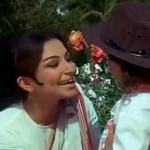
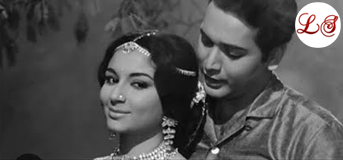
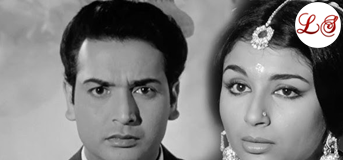
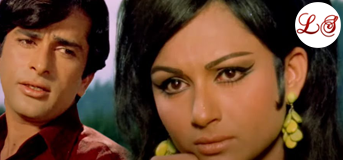
Top 5 Sharmila Tagore Songs



















About Sharmila Tagore
Sharmila Tagore was born on 8 December 1944 in Hyderabad, India. She comes from the prominent Tagore family and is a distant relative of Nobel laureate Rabindranath Tagore.
She began her acting career in Bengali cinema under the direction of legendary filmmaker Satyajit Ray. Her first major film was Apur Sansar (1959), the final part of Ray's acclaimed Apu Trilogy. Her performance as Aparna brought her recognition as a talented young actress.
Sharmila subsequently entered Hindi cinema and quickly became one of its leading actresses. Her early Hindi successes included Kashmir Ki Kali (1964) opposite Shammi Kapoor and Waqt (1965). Her pairing with Shammi Kapoor became particularly popular during the 1960s.
She later developed a highly successful screen partnership with Rajesh Khanna. Their films included Aradhana (1969), Safar (1970), Amar Prem (1972), Daag (1973), Avishkaar (1974) and Chhoti Bahu (1971). Several of their collaborations became major successes, while some of their critically acclaimed films also gained a strong reputation over time.
Sharmila also demonstrated considerable versatility in films such as Anupama (1966), Satyakam (1969), Mausam (1975), Amanush (1975), Chupke Chupke (1975) and Namkeen (1982). Her ability to move between romance, drama, comedy and socially significant stories established her as more than a conventional leading lady.
She married legendary Indian cricketer Mansoor Ali Khan Pataudi on 27 December 1969. They had three children: Saif Ali Khan, Saba Ali Khan and Soha Ali Khan.
Sharmila continued appearing in films in later decades, taking on mature and character-oriented roles. Her later notable appearances include Mann (1999), Viruddh... Family Comes First (2005), Eklavya: The Royal Guard (2007), Antaheen (2008) and Gulmohar (2023).
She has also served in important public and cultural roles, including as Chairperson of the Central Board of Film Certification (CBFC).
Personal Details
- Name: Sharmila Tagore
- Profession: Actress, Producer
- Birth Date: 8 December 1944
- Birth Place: Hyderabad, India
- Death Date: N/A / Still alive
- Bengali Film Debut: Apur Sansar (1959)
- Notable Films: Apur Sansar, Kashmir Ki Kali, Anupama, Aradhana, Satyakam, Amar Prem, Safar, Daag, Mausam, Chupke Chupke, Amanush, Eklavya, Gulmohar
- Husband: Mansoor Ali Khan Pataudi
- Marriage Date: 27 December 1969
- Children: Saif Ali Khan, Saba Ali Khan and Soha Ali Khan
- Notable Screen Partners: Rajesh Khanna, Shammi Kapoor, Shashi Kapoor, Dharmendra
- Years Active: 1959–present