
 Geeton ka Sangrah
Trending:
Kyon Chhupate Ho Mann Ki Baat (क्यों छुपाते हो मन की बात)
— Anuradha Paudwal
Classic:
Khushiyan Aur Gam (खुशियाँ और ग़म)
— Anuradha Paudwal
Classic:
Kehna Hai Tumse Kehna (कहना है, तुमसे कहना है)
— Hema Sardesai
Trending:
Kali Nagin Ke Jaisi (काली नागिन के जैसी)
— Kavita Krishnamurthy
Trending:
Chaha Hai Tujhko (चाहा है तुझको)
— Anuradha Paudwal
Classic:
Kyaa Dekh Rahe Ho Tum (क्या देख रहे हो तुम)
— Madhushree
Classic:
Ishq Bina Ishq Bina (इश्क़ बिना, इश्क़ बिना)
— Kavita Krishnamurthy
New:
Kariye Na (करिये ना)
— Alka Yagnik
Classic:
Ramta Jogi (रामता जोगी)
— Alka Yagnik
Trending:
Ni Main Samajh Gayee (नि में समझ गयी)
— Richa Sharma
Satyakam (1969) Songs Lyrics
Satyakam is a 1969 Hindi drama directed by Hrishikesh Mukherjee and produced by Sher Jeng Singh Punchhe. The film stars Dharmendra, Sharmila Tagore, Ashok Kumar and Sanjeev Kumar in important roles. It is based on the Bengali novel Satyakam by Narayan Sanyal, with screenplay by Bimal Dutta and dialogues by Rajinder Singh Bedi. The music was composed by Laxmikant–Pyarelal, with lyrics by Kaifi Azmi.
The film follows Satyapriya Acharya, an idealistic young engineer who believes that truth and honesty must never be compromised. His uncompromising principles repeatedly bring him into conflict with society, family traditions and the realities of post-independence India. His marriage to Ranjana, a woman carrying the trauma of sexual violence, becomes the emotional centre of the story.
Satyakam is regarded as one of Hrishikesh Mukherjee's most serious and philosophical films. It won the National Film Award for Best Feature Film in Hindi, while Rajinder Singh Bedi received the Filmfare Award for Best Dialogue.


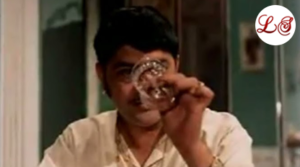
About the Movie Satyakam (1969)
The story is set around the final years of British rule and the early period of independent India.
Satyapriya "Sat" Acharya, played by Dharmendra, is raised by his grandfather Satyasharan Acharya, played by Ashok Kumar. His grandfather is a deeply religious and principled man who teaches Sat that truth must always be upheld, regardless of the consequences.
Sat grows up with these ideals and becomes an engineering graduate.
After completing his studies, Sat and his close friend Narendra "Naren" Sharma, played by Sanjeev Kumar, enter professional life with hopes of helping build a better India.
Sat soon discovers that the world around him does not always operate according to the principles he has been taught.
He refuses to compromise his honesty even when doing so would make his professional and personal life easier.
During his work, Sat meets Ranjana, played by Sharmila Tagore.
Ranjana has suffered a terrible injustice. She has been sexually assaulted by a powerful man and is pregnant as a result.
Sat is confronted with a difficult moral choice.
Instead of rejecting Ranjana because of society's prejudices, he decides to marry her.
His decision shocks his family and challenges the rigid social values of the time.
Sat and Ranjana begin their married life, and she eventually gives birth to a son.
Sat accepts the child completely as his own.
However, his grandfather struggles to accept the child because the boy is not Sat's biological son.
This creates a deep conflict between traditional ideas of purity and Sat's belief in compassion, truth and human dignity.
Sat continues to face difficulties because he refuses to compromise his principles.
His idealism often makes his life harder, but he remains convinced that living according to truth is more important than social acceptance or personal comfort.
His friend Naren provides a contrasting perspective and remains close to him throughout his struggles.
As the years pass, the family's understanding of truth and morality is tested even further.
The film's emotional climax centres on Sat's son and the question of whether a child should be judged for circumstances over which he had no control.
Eventually, Sat's grandfather is forced to confront the contradiction between the principles he has preached throughout his life and the prejudices he himself has been unable to overcome.
The child openly tells the truth about his parentage.
The grandfather realizes that truth is not merely something to be studied in scriptures—it must also be practised when it is painful and personally challenging.
He acknowledges his mistake and accepts the child.
The film ends on a note of forgiveness, acceptance and moral awakening, emphasizing that genuine truthfulness must be accompanied by compassion and humanity.
Main Cast
- Dharmendra — Satyapriya "Sat" Acharya
- Sharmila Tagore — Ranjana
- Ashok Kumar — Satyasharan "Dadaji" Acharya
- Sanjeev Kumar — Narendra "Naren" Sharma
- Robi Ghosh — Anantho Chatterjee
- David Abraham — Rustom
- Baby Sarika — Kabul S. Acharya
- Tarun Bose — Mr. Ladia
- Asrani — Peter
- Dina Pathak — Harbhajan's mother
- Manmohan — Kunver Vikram Singh
- D. K. Sapru — Diwan Bajridhar Talwar
- Rajan Haksar — Shyam Sunder
- Dev Kishan — Shiv Nandan
Director & Production
Director: Hrishikesh Mukherjee
Producer: Sher Jeng Singh Punchhe
Story: Narayan Sanyal
Screenplay: Bimal Dutta
Dialogues: Rajinder Singh Bedi
Music: Laxmikant–Pyarelal
Lyrics: Kaifi Azmi
Cinematography: Jaywant Pathare
Editing: Das Dhaimade
Production Company: Punchhe Arts International
Language: Hindi
Genre: Drama
Runtime: Approximately 175 minutes
The film is based on Narayan Sanyal's Bengali novel of the same name. Its title is inspired by the ancient figure Satyakama Jabala, associated with truthfulness and integrity.
Music
The music was composed by Laxmikant–Pyarelal, with lyrics by Kaifi Azmi.
Songs
- Do Din Ki Zindagi
- Kaisi Hai Zindagi
- Zindagi Hai Kya Bolo
- Abhi Kya Sunoge
- Tumhare Bina O Gori
- Badi Door Se Aaye Hain
The music supports the film's reflective and emotional tone rather than functioning simply as entertainment.
Themes
Satyakam explores:
- Truth and honesty
- Moral integrity
- Social prejudice
- Family values
- Women's dignity
- Acceptance and compassion
- Illegitimacy and social stigma
- Tradition versus modern values
- Idealism versus reality
- Humanity and forgiveness
The central idea is that truth has meaning only when people are willing to accept it even when it challenges their own beliefs and prejudices.
Legacy
Satyakam is widely regarded as one of the most profound films of Hrishikesh Mukherjee's career. Dharmendra's portrayal of Satyapriya is particularly remembered for presenting him as a deeply principled but vulnerable idealist.
The film won the National Film Award for Best Feature Film in Hindi. It also received the Filmfare Award for Best Dialogue for Rajinder Singh Bedi.
The film was later remade in Tamil as Punnagai (1971), directed by K. Balachander.