
 Geeton ka Sangrah
Added:
Na Kajare Ki Dhar (ना कजरे की धार) (Part – 2)
— Sadhana Sargam
Added:
Na Kajare Ki Tasveer Teri (ना कजरे की तस्वीर तेरी)
— Pankaj Udhas
New:
Main Cheez Badi Hoon Mast Mast (मैं चीज़ बड़ी हूँ मस्त मस्त)
— Kavita Krishnamurthy
Popular:
Dil Har Koi Deta Hain (दिल हर कोई देता हैं)
— Alka Yagnik
Trending:
Ae Kash Kahi Aisa Hota (ऐ काश कही ऐसा होता)
— Kumar Sanu
Trending:
Subah Se Lekar Shaam Tak (सुबह से लेकर शाम तक)
— Sadhana Sargam
New:
Na Kajre Ki Dhar (ना कजरे की धार)
— Pankaj Udhas
New:
Tip Tip Barsa Paani (टिप टिप बरसा पानी)
— Alka Yagnik
Added:
Tu Chiz Badi Hai Mast Mast (तू चीज़ बड़ी है मस्त मस्त)
— Kavita Krishnamurthy
Classic:
Kya Sochta Hai Ae Dil (क्या सोचता हैं ऐ दिल)
— Anuradha Paudwal
Lata Mangeshkar Songs Lyrics
Lata Mangeshkar was one of the most influential and celebrated playback singers in the history of Indian cinema. Revered as the “Nightingale of India” (Bharat Kokila), she had a career spanning more than seven decades and recorded thousands of songs in numerous Indian languages.
With her exceptionally clear, expressive and versatile voice, Lata Mangeshkar became one of the defining voices of Hindi film music. She worked with virtually every major composer and singer of her era and lent her voice to generations of leading actresses. Her recordings include romantic songs, classical compositions, devotional music, patriotic songs, ghazals, lullabies and regional-language music.
Among her most remembered songs are “Ajeeb Dastan Hai Yeh,” “Lag Ja Gale,” “Aap Ki Aankhon Mein Kuch,” “Tere Bina Zindagi Se,” “Pyar Kiya To Darna Kya,” “Aaj Phir Jeene Ki Tamanna Hai,” “Satyam Shivam Sundaram,” “Ae Mere Watan Ke Logon,” and “Tujhse Naraz Nahi Zindagi.”
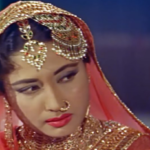
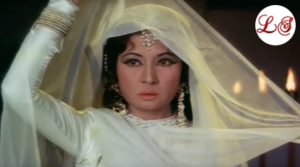
Top 5 Lata Mangeshkar Songs

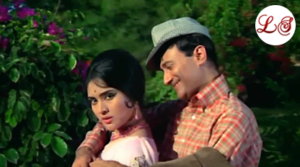
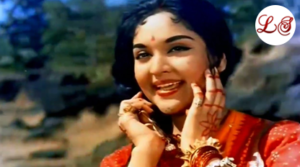
About Lata Mangeshkar
Lata Mangeshkar was born as Hema Mangeshkar on 28 September 1929 in Indore, Madhya Pradesh, India. She was the eldest daughter of renowned Marathi musician and theatre personality Pandit Deenanath Mangeshkar and Shevanti Mangeshkar.
Her father was a respected classical singer and theatre artist, and Lata received her earliest musical training from him. Music became an integral part of her childhood, and she began performing publicly at a very young age.
After the death of her father in 1942, Lata began working professionally to support her family. She initially worked as an actress and singer in Marathi films before moving increasingly toward playback singing.
Early Musical Career
Lata Mangeshkar's early career was challenging. In the 1940s, Hindi film music was dominated by singers with heavier and more powerful voices, while Lata's voice was comparatively delicate and high-pitched.
Her early recordings included songs for Marathi and Hindi films. Music director Ghulam Haider played an important role in encouraging her career and reportedly recognized her potential at a time when some filmmakers were uncertain about her voice.
Her major breakthrough came with the song “Aayega Aanewala” from the 1949 film Mahal, composed by Khemchand Prakash. The song became enormously popular and established Lata Mangeshkar as a major new voice in Hindi cinema.
Rise to Stardom
During the 1950s and 1960s, Lata became the leading female playback singer in Hindi cinema. Her collaborations with composers such as Shankar–Jaikishan, S. D. Burman, Madan Mohan, Salil Chowdhury, Naushad, C. Ramchandra, Roshan, O. P. Nayyar, and Jaidev produced countless memorable songs.
Her voice became associated with leading actresses including Madhubala, Nargis, Meena Kumari, Nutan, Waheeda Rehman, Sadhana, Sharmila Tagore, Hema Malini, Rekha, and many others.
Popular Songs
Some of Lata Mangeshkar's most famous songs include:
- Aayega Aanewala — Mahal
- Ajeeb Dastan Hai Yeh — Dil Apna Aur Preet Parai
- Lag Ja Gale — Woh Kaun Thi?
- Pyar Kiya To Darna Kya — Mughal-e-Azam
- Aaja Re Pardesi — Madhumati
- Aaj Phir Jeene Ki Tamanna Hai — Guide
- Piya Tose Naina Lage Re — Guide
- Tere Bina Zindagi Se — Aandhi
- Tujhse Naraz Nahi Zindagi — Masoom
- Aap Ki Aankhon Mein Kuch — Ghar
- Bahon Mein Chale Aao — Anamika
- Satyam Shivam Sundaram — Satyam Shivam Sundaram
- Sheesha Ho Ya Dil Ho — Aasha
- Naam Gum Jayega — Kinara
- Do Pal — Veer-Zaara
- Humko Humise Chura Lo — Mohabbatein
- Didi Tera Devar Deewana — Hum Aapke Hain Koun..!
- Mere Khwabon Mein — Dilwale Dulhania Le Jayenge
- Dil To Pagal Hai — Dil To Pagal Hai
Patriotic Music
Lata Mangeshkar also became strongly associated with Indian patriotic music.
Her performance of “Ae Mere Watan Ke Logon”, written by Kavi Pradeep and composed by C. Ramchandra, became one of India's most iconic patriotic songs. She first performed it publicly in 1963, shortly after the Sino-Indian War.
The song became an enduring symbol of national remembrance and continues to be performed on national occasions.
Lata Mangeshkar and Classical Music
Although primarily recognized as a playback singer, Lata had a strong foundation in Indian classical music. Her training allowed her to handle technically demanding compositions with remarkable precision.
She worked with composers such as Madan Mohan, Naushad, S. D. Burman, Salil Chowdhury, and others whose compositions frequently incorporated classical ragas and sophisticated musical arrangements.
Her ability to maintain classical discipline while making songs accessible to mainstream audiences was one of the defining characteristics of her career.
Duets and Collaborations
Lata Mangeshkar recorded thousands of duets with many of India's greatest male and female singers.
Her major collaborators included:
- Mohammed Rafi
- Kishore Kumar
- Mukesh
- Manna Dey
- Hemant Kumar
- Bhupinder Singh
- Mahendra Kapoor
- Talat Mahmood
- Asha Bhosle
- Usha Mangeshkar
Her duets with Mohammed Rafi and Kishore Kumar became particularly popular and remain classics of Hindi film music.
Regional-Language Singing
Lata Mangeshkar was not limited to Hindi cinema. She recorded extensively in Marathi, her mother tongue, as well as Bengali, Gujarati, Tamil, Telugu, Kannada, Malayalam, Assamese, Punjabi, Bhojpuri, Nepali, Urdu and several other languages.
She had a particularly close connection with Marathi music and recorded numerous bhajans, devotional songs, ghazals, classical compositions and non-film songs.
Music Direction
Lata Mangeshkar also worked as a music composer under the name Anandghan.
She composed music for several Marathi films, including:
- Ram Ram Pavhana
- Maratha Tituka Melavava
- Mohi Tyanchi Manjula
- Sadhi Manase
- Tambda Vidi
Her work as a composer demonstrated that her musical abilities extended far beyond playback singing.
Awards & Recognition
Lata Mangeshkar received virtually every major honor available to an Indian artist.
Her most important honors include:
- Bharat Ratna — 2001
- Padma Vibhushan — 1999
- Padma Bhushan — 1969
- Dadasaheb Phalke Award — 1989
- Maharashtra Bhushan Award — 1997
- National Film Awards
- Filmfare Awards
- Bengal Film Journalists' Association Awards
- France's Legion of Honour — 2007
She won the National Film Award for Best Female Playback Singer three times.
She also became the first recipient of the Filmfare Lifetime Achievement Award in 1994.
Guinness World Record
Lata Mangeshkar was once associated with a Guinness World Record recognizing her as the most-recorded singer, although the historical claim and its exact methodology have been debated and later records have superseded it.
Regardless of record classifications, her recording output was extraordinary, spanning thousands of songs across multiple languages and generations.
International Recognition
Lata Mangeshkar's influence extended beyond India. Her music has been appreciated throughout South Asia and by Indian communities around the world.
Her voice became a cultural symbol of Indian cinema, and she was honored internationally for her contribution to music.
Later Career
Lata Mangeshkar continued recording selectively even after reducing her workload in the later decades of her career.
She sang for several major films in the 1990s and 2000s, including Dilwale Dulhania Le Jayenge, Dil To Pagal Hai, Mohabbatein, Veer-Zaara, and others.
Her voice remained associated with emotional and classical-style songs even as the sound of Hindi cinema changed dramatically.
Birth Details
Full Name: Hema Mangeshkar
Popular Name: Lata Mangeshkar
Also Known As: Lata Didi, Nightingale of India, Queen of Melody
Date of Birth: 28 September 1929
Birth Place: Indore, Madhya Pradesh, India
Profession: Playback Singer, Classical Singer, Music Composer, Producer
Languages: Hindi, Marathi, Bengali, Gujarati, Tamil, Telugu, Kannada, Malayalam, Punjabi, Nepali, Assamese and others
Genres: Indian Classical, Film Music, Ghazal, Devotional, Patriotic, Bhajan
Years Active: 1942–2019
Death Details
Death Date: 6 February 2022
Death Place: Mumbai, Maharashtra, India
Age: 92 years