
 Geeton ka Sangrah
Trending:
Dekho Zara Kaise Balkhake Chali (देखो ज़रा कैसे बलखा के चली है)
— Gurdas Maan
Popular:
Uparwala Apne Saath Hai (उपरवाला अपने साथ हैं)
— Kumar Sanu
Trending:
Ek Mulakat Zaruri Hai Sanam (एक मुलाकात ज़रूरी हैं सनम)
— Ameen Sabri
Popular:
Panchhi Sur Me Gaate Hai (पंछी सुर में गाते हैं)
— Udit Narayan
Popular:
Dilbar Dilbar (दिलबर दिलबर)
— Alka Yagnik
New:
Sirf Tum (सिर्फ तुम)
— Anuradha Paudwal
Classic:
Pehli Pehli Baar Mohabbat Ki Hai (पहली पहली बार मोहब्बत की है)
— Alka Yagnik
New:
Jai Maa Kali (जय माँ काली)
— Alka Yagnik
Trending:
Gup Chup Gup Chup (गुप चुप गुप चुप)
— Alka Yagnik
Added:
Bhangada Paale Aaja Aaja (भंगड़ा पाले आजा आजा)
— Mohammed Aziz
Pakeezah (1972) Songs Lyrics
Pakeezah is a landmark 1972 Hindi-Urdu musical romantic drama written, directed and produced by Kamal Amrohi. The film stars Meena Kumari, Raaj Kumar and Ashok Kumar in the principal roles, with Veena, D. K. Sapru, Nadira and Kamal Kapoor in supporting roles. The music was composed primarily by Ghulam Mohammed, with Naushad providing additional music/background score.
Set in the cultural world of early-20th-century Lucknow, the film tells the tragic story of Sahibjaan, a courtesan who dreams of escaping the stigma attached to her profession and finding genuine love, dignity and acceptance. Her life changes after she receives a mysterious note from Salim Ahmed Khan, a stranger who admires her beauty without knowing her identity.
Pakeezah is celebrated for its poetic dialogue, magnificent costumes and sets, classical dance sequences, Lucknowi culture and unforgettable music. Although its initial critical response was mixed, the film became a major commercial success and is now regarded as one of the enduring classics of Indian cinema.

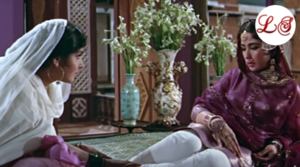
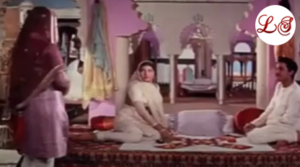
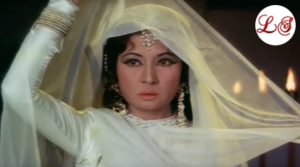
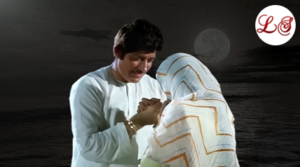
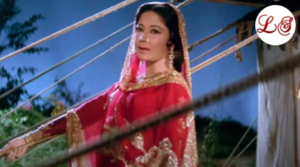
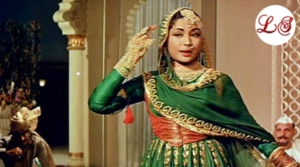
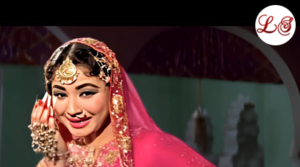
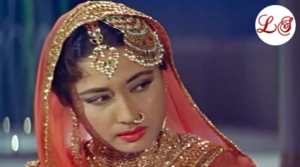
About the Movie Pakeezah (1972)
The story begins with Shahabuddin, played by Ashok Kumar, a man from a respectable and aristocratic family who falls in love with Nargis, a beautiful tawaif played by Meena Kumari.
Shahabuddin wants to marry Nargis, but his family and social circumstances prevent their relationship from receiving acceptance.
Heartbroken, Nargis leaves Shahabuddin and eventually gives birth to their daughter. She dies after giving birth, leaving the child to be raised away from her father.
The child grows up to become Sahibjaan, a talented dancer and singer who is raised in the world of courtesans. Despite her artistic talent and beauty, Sahibjaan longs for a life in which she can be respected as a woman rather than judged by her profession.
One night, while Sahibjaan is travelling on a train, she falls asleep. A stranger, Salim Ahmed Khan, played by Raaj Kumar, notices her and leaves a poetic note praising her beautiful feet. Sahibjaan becomes fascinated by the mysterious man who admired her without knowing who she was.
Their paths cross again, and Sahibjaan and Salim gradually fall in love.
Salim eventually learns about Sahibjaan's background. Although he loves her deeply, the social stigma surrounding her profession creates an enormous barrier between them.
Sahibjaan believes that her past makes her unworthy of becoming Salim's wife. Salim, however, wants to accept her for the person she truly is.
The couple attempt to escape from the constraints of society, but Sahibjaan's identity continues to follow her wherever she goes. She is repeatedly forced to confront the reality that society sees her profession before seeing her humanity.
The story becomes further complicated when Sahibjaan discovers the truth about her parentage and her connection with Shahabuddin.
The revelation brings together the past and present lives of the principal characters and gives Sahibjaan an opportunity to understand her identity.
Ultimately, the film moves toward a resolution in which love, family and social acceptance come together, allowing Sahibjaan to leave behind the life that had defined her and embrace a new beginning with Salim.
Main Cast
- Meena Kumari — Nargis / Sahibjaan / Pakeezah
- Raaj Kumar — Salim Ahmed Khan
- Ashok Kumar — Shahabuddin
- Veena — Nawabjaan
- D. K. Sapru — Hakim Saab
- Kamal Kapoor — Nawab Zafar Ali Khan
- Nadira — Madame Gauhar Jaan
- Pratima Devi — Salim's Badi Amma
- Vijay Laxmi — supporting role
- Kamal Amrohi — producer/director
The principal cast and character credits are documented by IMDb.
Director & Production
Director: Kamal Amrohi
Producer: Kamal Amrohi
Story: Kamal Amrohi
Screenplay: Kamal Amrohi
Music: Ghulam Mohammed, Naushad
Lyrics: Kaifi Azmi, Majrooh Sultanpuri, Kaif Bhopali, Kamal Amrohi and others
Cinematography: Josef Wirsching
Editing: D. N. Pai
Production Companies: Mahal Pictures Pvt. Ltd., Sangeeta Enterprises
Language: Hindi / Urdu
Genre: Musical, Romance, Drama
Runtime: Approximately 147 minutes, although some sources give longer versions.
One of the remarkable aspects of Pakeezah is its unusually long production history. The film was launched in 1958 and took approximately 14 years to complete. Changes in filmmaking technology, including the move from black-and-white to colour and later CinemaScope, contributed to the long production period.
Music
The music of Pakeezah was composed primarily by Ghulam Mohammed, with Naushad contributing additional music and background score. The lyrics came from poets including Kaifi Azmi, Majrooh Sultanpuri, Kaif Bhopali and Kamal Amrohi.
Popular Songs
- Chalte Chalte Yun Hi Koi Mil Gaya Tha — Lata Mangeshkar
- Inhi Logon Ne Le Lina Dupatta Mera — Lata Mangeshkar
- Thare Rahiyo O Banke Yaar Re — Lata Mangeshkar
- Mausam Hai Aashiqana — Lata Mangeshkar
- Chalo Dildaar Chalo — Lata Mangeshkar & Mohammed Rafi
- Aaj Hum Apni Duaon Ka Asar Dekhenge — Lata Mangeshkar
- Kaun Gali Gayo Shyam — Parveen Sultana
- Tanhai Sunaya Karti Hai — Lata Mangeshkar
The soundtrack is considered one of the film's defining achievements, combining ghazal, thumri, mujra and classical influences with the poetic atmosphere of Lucknow.
Themes
Pakeezah explores:
- Love and sacrifice
- Social stigma
- Dignity and self-respect
- Class and social status
- Family honour
- Identity
- Women and societal expectations
- Art and courtesan culture
- Acceptance and redemption
- Love overcoming social barriers
The central emotional idea is that a person's dignity and purity cannot be determined simply by social status or profession.
Legacy
Pakeezah became a major commercial success and is now considered a milestone of the Muslim-social and period-drama genre in Hindi cinema. It emerged as the highest-grossing Hindi film of 1972, with a theatrical run of more than 50 weeks.
The film is particularly remembered as one of Meena Kumari's defining performances. Her portrayal of Nargis/Sahibjaan captures the character's vulnerability, dignity, loneliness and desire for love.
The film also became closely associated with Meena Kumari's final years. She died only a few weeks after the film's release, which further contributed to its lasting cultural significance.
Its elaborate sets, period costumes, choreography, cinematography and poetry have made Pakeezah a visual and musical landmark. The film continues to be celebrated for songs such as “Chalte Chalte,” “Inhi Logon Ne,” “Thare Rahiyo” and “Mausam Hai Aashiqana.”