
 Geeton ka Sangrah
New:
Rabbaa Rabbaa, I Love You (रब्बा रब्बा, आई लव यू)
— Sonu Nigam
Trending:
Tu Soni Kudi (तू सोनी कुड़ी)
— Anu Malik
Added:
Sajan Sajan Teri Dulhan (साजन साजन तेरी दुल्हन)
— Alka Yagnik
Trending:
Jai Mata Di (जय माता दी)
— Sonu Nigam
Trending:
Ab Tere Dil Men Hum Aa Gaye To (अब तेरे दिल में हम आ गए तो)
— Alka Yagnik
Classic:
Mil Jate Hai Jo Pyar Me (मिल जाते है जो प्यार में)
— Alka Yagnik
Popular:
Main Aa Raha Hoon Wapas (मैं आ रहा हूँ वापस)
— Udit Narayan
Trending:
Dosti Karte Nahin (दोस्ती करते नहीं)
— Alka Yagnik
Popular:
Sooryavansham (सूर्यवंशम)
— Sonu Nigam
Added:
Har Subah (हर सुबह)
— K. S. Chithra
Roop Kumar Rathod Songs Lyrics
Roop Kumar Rathod is a renowned Indian playback singer, ghazal singer, music composer and musician known for his soulful, powerful and deeply expressive voice. He has made a significant contribution to Hindi film music, ghazals, Sufi music, devotional music and Indian classical-based compositions. He has also sung in several Indian languages, including Hindi, Gujarati, Marathi, Tamil, Telugu, Bengali, Assamese, Odia, Nepali, Bhojpuri and Kannada.
He is particularly remembered for iconic songs such as “Sandese Aate Hai” and “To Chalun” from Border, “Maula Mere Maula” from Anwar, and “Tujh Mein Rab Dikhta Hai” from Rab Ne Bana Di Jodi. His voice is known for conveying emotions ranging from patriotism and longing to romance and spirituality.


About Roop Kumar Rathod
Roop Kumar Rathod was born on 10 June 1973 in Mumbai, Maharashtra, India. He comes from a distinguished musical family. His father, Pandit Chaturbhuj Rathod, was a respected Dhrupad exponent and musician associated with the Aditya Gharana of Jamnagar. His brothers include the late music composer Shravan Rathod of the Nadeem–Shravan duo and playback singer Vinod Rathod.
Roop Kumar was introduced to music from childhood. He initially established himself as a talented tabla player before turning toward singing. He performed tabla from a very young age and eventually became associated with the concerts of prominent ghazal singers.
Early Musical Journey
Roop Kumar's first musical identity was as a tabla artist.
According to his own account, he gave his first tabla performance at just six years of age. During the 1980s, he performed as a tabla player at ghazal concerts featuring legendary artists such as Mehdi Hassan, Ghulam Ali, Jagjit Singh, Pankaj Udhas and Hariharan.
His extensive experience accompanying established singers helped him develop a deep understanding of melody, rhythm and vocal expression.
At around the age of 24, when he was already receiving recognition as a tabla player, he made the important decision to pursue singing professionally.
Family and Musical Background
Roop Kumar was born into a family deeply connected with Indian classical music.
His father, Pandit Chaturbhuj Rathod, was a respected exponent of Dhrupad, one of the oldest surviving forms of Hindustani classical vocal music.
His brothers also became prominent figures in Indian music:
- Shravan Rathod — music composer, one half of Nadeem–Shravan
- Vinod Rathod — playback singer
- Roop Kumar Rathod — playback singer, ghazal singer and composer
His wife Sunali Rathod is also a playback and classical singer. Their daughter Reewa Rathod is a singer, songwriter and pianist.
Playback Singing Career
Roop Kumar Rathod entered Hindi playback singing in the early 1990s.
Sources differ on the exact debut-film year and song credit: some sources list Angaar (1992) as his playback debut, while other databases cite Gumrah and the song “Main Tera Aashiq Hoon.” For your database, it is safer to describe his playback career as beginning in the early 1990s rather than relying on one disputed debut date.
He subsequently sang for numerous Hindi and regional-language films.
Breakthrough with Border
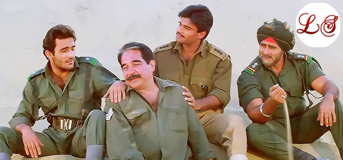
Roop Kumar Rathod's major breakthrough came with the 1997 Hindi film Border.
He sang two of the film's most memorable songs:
“Sandese Aate Hai”
This patriotic song, composed by Anu Malik with lyrics by Javed Akhtar, became one of the most recognized songs associated with Indian soldiers and their families.
Roop Kumar's powerful delivery helped make the song an enduring patriotic favorite.
“To Chalun”
He also sang “To Chalun” from Border, a deeply emotional song about separation, longing and departure.
These songs established Roop Kumar as a major playback voice in Hindi cinema.
Maula Mere Maula
One of Roop Kumar Rathod's most celebrated songs is “Maula Mere Maula” from the 2007 film Anwar.
The song became particularly popular for its Sufi-inspired melody, spiritual atmosphere and emotionally intense vocals.
It remains one of the signature songs associated with Roop Kumar Rathod.
Tujh Mein Rab Dikhta Hai
Roop Kumar Rathod also sang “Tujh Mein Rab Dikhta Hai” for the 2008 film Rab Ne Bana Di Jodi.
The song expresses the idea of finding the divine in one's beloved and became one of the most popular romantic-spiritual songs of modern Hindi cinema.
His rendition emphasized the devotional quality of the composition and became an important addition to his playback repertoire.
Other Popular Songs
Some of Roop Kumar Rathod's notable songs include:
- Sandese Aate Hai — Border
- To Chalun — Border
- Maula Mere Maula — Anwar
- Tujh Mein Rab Dikhta Hai — Rab Ne Bana Di Jodi
- Woh Lamhe Woh Baatein — Zeher
- Dilko Tumse Pyar Hua — Rehnaa Hai Terre Dil Mein
- Zindagi Maut Na Ban Jaaye — Sarfarosh
- Tere Liye — Veer-Zaara
- Aankhen Teri — Anwar
- Dabi Dabi Saanson Mein — Veer
- Tujhse Naraz Nahin Zindagi — various performances/recordings
- O Saiyyan — Sufi repertoire
Ghazal Singing
Ghazal music has remained an important part of Roop Kumar Rathod's musical identity.
Before becoming a major Bollywood playback singer, he accompanied some of the greatest ghazal singers as a tabla player. His later work as a vocalist naturally incorporated elements of ghazal phrasing, classical melody and emotional interpretation.
He has performed ghazals extensively in concerts in India and abroad.
Sufi Music
Roop Kumar Rathod is also strongly associated with Sufi music.
His voice is particularly suited to spiritual and emotionally intense compositions. “Maula Mere Maula” became one of his most recognized Sufi-oriented songs.
He has also released Sufi music with his wife Sunali Rathod, including the album Kalma.
Devotional Music
Apart from Bollywood and ghazals, Roop Kumar Rathod has recorded numerous devotional and spiritual songs.
His catalog includes works related to:
- Lord Hanuman
- Lord Krishna
- Shiva
- Sufi spirituality
- Hindu devotional traditions
- Mantras and spiritual compositions
His recordings include Shree Hanuman Chalisa, Hanuman Ashtak and other devotional works.
Collaboration with Sunali Rathod
Roop Kumar Rathod and his wife Sunali Rathod have performed together extensively.
Their joint performances combine:
- Ghazal
- Sufi music
- Light classical music
- Bollywood songs
- Devotional music
The couple has toured internationally and has also released collaborative albums, including Kalma.
They also participated together in the television musical reality show Mission Ustaad, where they were declared the “Ustaad Jodi” in 2008.
Classical Music Background
Roop Kumar's singing has a strong classical foundation because of his upbringing under the influence of his father, Pandit Chaturbhuj Rathod.
His experience as a tabla player also gave him a strong command of rhythm and musical timing.
This combination of classical training, rhythm and ghazal experience helped him develop a distinctive vocal style.
Music Composition
In addition to singing, Roop Kumar Rathod has worked as a music composer.
His professional work therefore extends across:
- Playback singing
- Ghazal singing
- Sufi music
- Devotional music
- Music composition
- Live concerts
- Classical and fusion music
His official website describes his musical career as spanning more than three decades.
Fusion Music
Roop Kumar has also explored fusion music.
He has collaborated with musicians including Trilok Gurtu, Ranjit Barot and Abhijit Pohankar.
He and Trilok Gurtu worked on projects including Beat of Love and Broken Rhythms, reflecting his interest in combining Indian musical traditions with contemporary and international sounds.
Awards and Recognition
Roop Kumar Rathod has received recognition for his contribution to Indian music.
Notable honors include:
- Mirchi Music Award for Song Representing Sufi Tradition — for “O Saiyyan”
- GIMA Award for Best Ghazal Album — Zikr Tera
- Lokmat Sur Jyotsna National Music Award — 2021
He has also received a Filmfare Award nomination for his work in playback singing.
Photography and Wildlife
Apart from music, Roop Kumar Rathod has a strong interest in wildlife photography.
His love for nature and wilderness has become an important part of his personal life. His official website describes the forest as a source of inspiration and meditation.
He also published a wildlife photography book titled Wild Voyage in 2019.
Musical Style
Roop Kumar Rathod is particularly known for:
- Deep and resonant vocals
- Emotional singing
- Ghazal-style expression
- Sufi music
- Classical influences
- Devotional singing
- Romantic playback singing
- Powerful vocal projection
- Strong rhythmic understanding
His voice can move comfortably between film songs, ghazals, Sufi compositions, devotional music and classical-based material.
Contribution to Indian Music
Roop Kumar Rathod has made a distinctive contribution to Indian music by combining his classical heritage, tabla background, ghazal experience and playback singing.
His career demonstrates a transition from instrumental performance to professional singing, eventually making him one of the recognizable voices of Hindi film music.
Songs such as “Sandese Aate Hai,” “To Chalun,” “Maula Mere Maula” and “Tujh Mein Rab Dikhta Hai” have become important parts of his musical legacy.
Birth Details
Full Name: Roop Kumar Rathod
Profession: Playback Singer / Ghazal Singer / Music Composer / Musician
Date of Birth: 10 June 1973
Birth Place: Mumbai, Maharashtra, India
Nationality: Indian
Genres: Bollywood / Ghazal / Sufi / Indian Classical / Devotional Music
Spouse: Sunali Rathod
Father: Pandit Chaturbhuj Rathod
Brothers: Shravan Rathod, Vinod Rathod
Daughter: Reewa Rathod
Status: Alive