
 Geeton ka Sangrah
Classic:
Kyon Chhupate Ho Mann Ki Baat (क्यों छुपाते हो मन की बात)
— Anuradha Paudwal
Popular:
Khushiyan Aur Gam (खुशियाँ और ग़म)
— Anuradha Paudwal
Popular:
Kehna Hai Tumse Kehna (कहना है, तुमसे कहना है)
— Hema Sardesai
Trending:
Kali Nagin Ke Jaisi (काली नागिन के जैसी)
— Kavita Krishnamurthy
Popular:
Chaha Hai Tujhko (चाहा है तुझको)
— Anuradha Paudwal
Trending:
Kyaa Dekh Rahe Ho Tum (क्या देख रहे हो तुम)
— Madhushree
Classic:
Ishq Bina Ishq Bina (इश्क़ बिना, इश्क़ बिना)
— Kavita Krishnamurthy
Popular:
Kariye Na (करिये ना)
— Alka Yagnik
Popular:
Ramta Jogi (रामता जोगी)
— Alka Yagnik
Trending:
Ni Main Samajh Gayee (नि में समझ गयी)
— Richa Sharma
Bazaar (1982) Songs Lyrics
Bazaar (1982) is a landmark Hindi-Urdu social drama directed by Sagar Sarhadi. The film stars Smita Patil, Naseeruddin Shah, Farooq Shaikh, and Supriya Pathak in important roles. Set primarily in Hyderabad, the film addresses the disturbing practice of bride buying, particularly the exploitation of financially vulnerable young women by wealthy men from the Gulf.
The story revolves around Najma, a young woman whose difficult circumstances and emotional past become connected with the practice of arranging marriages for money. At the same time, Salim, a young man who loves Shabnam, struggles to prevent her from being married off to a wealthy expatriate. The personal stories of these characters expose a larger social reality in which poverty and helplessness can turn marriage into a commercial transaction.
Rather than presenting romance as a simple love story, Bazaar uses relationships to explore poverty, exploitation, women's vulnerability, social inequality, and the commercialization of marriage. Its realistic atmosphere and restrained performances make it one of the notable films of India's parallel-cinema movement.



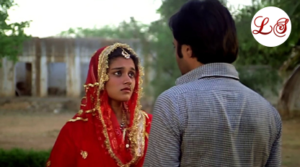

About the Movie Bazaar (1982)
Movie: Bazaar
Release Date: 21 May 1982
Language: Hindi, Urdu
Genre: Drama, Social
Director: Sagar Sarhadi
Producer: Vijay Talwar
Writer: Sagar Sarhadi
Music: Khayyam
Cinematography: Ishan Arya
Editing: S. Chakravarty
Production Company: New Wave Productions
Runtime: Approximately 120 minutes
Country: India
Release-date note: There is some variation among databases. IMDb lists 21 May 1982, while The Times of India lists 1 July 1982 and Digit lists 20 May 1982. For a movie database, 21 May 1982 is a reasonable date to use because IMDb specifically identifies it as the India release date.
Cast
- Smita Patil as Najma
- Naseeruddin Shah as Salim
- Farooq Shaikh as Sajju
- Supriya Pathak as Shabnam
- Bharat Kapoor as Akhtar Hussain
- B. L. Chopra as Shakir Ali Khan
- Sulabha Deshpande as Shabnam's mother
- Yunus Parvez as Shabnam's father
- Shaukat Azmi
- Nisha Singh as Nasreen
- Javed Khan
- Aanjjan Srivastav
Story Overview
The film is set against the social and cultural environment of Hyderabad. It presents a society where poverty can leave families with very few choices and where the marriage of young women can become a financial transaction.
Shabnam is a young woman in love with Salim. Her father, however, has other plans for her future and is willing to consider a marriage that offers greater financial security.
Salim tries to challenge this arrangement because he genuinely loves Shabnam. His struggle is not simply against one family decision but against a social system in which economic circumstances can determine whom a woman marries.
Alongside this story is Najma, whose own painful experiences reveal the darker side of the marriage market. The film gradually exposes how vulnerable women can be exploited by men who use their wealth and social position to obtain brides.
The parallel stories eventually create a disturbing picture of a society where love, dignity, and personal choice can be sacrificed for money.
Music
The music was composed by Khayyam, whose understated compositions perfectly complement the film's melancholic atmosphere.
Notable songs include:
- Dikhai Diye Yun
- Phir Chhidi Raat
- Dekh Lo Aaj Humko Jee Bharke
- Karoge Yaad To
- Chale Aao Saiyan
"Dikhai Diye Yun", sung by Lata Mangeshkar, and "Phir Chhidi Raat", sung by Lata Mangeshkar and Talat Aziz, are among the soundtrack's most remembered songs.
The song "Karoge Yaad To Har Baat Yaad Aayegi" later gained renewed popularity when it appeared on the 1995 album Saadgi.
Themes
The major themes of Bazaar include:
- Bride buying
- Poverty and exploitation
- Women's vulnerability
- Love versus social pressure
- Economic inequality
- Commercialization of marriage
- Social injustice
- Human dignity
- Personal freedom
The central idea is that when poverty becomes severe enough, even something as personal and sacred as marriage can become a marketplace.
Awards & Recognition
At the 1983 Filmfare Awards, Bazaar received nominations in several major categories, including Best Film, Best Director, Best Story, Best Actor, Best Actress, and Best Music Director. Supriya Pathak won Best Supporting Actress for her performance.