
 Geeton ka Sangrah
New:
Na Kajare Ki Dhar (ना कजरे की धार) (Part – 2)
— Sadhana Sargam
New:
Na Kajare Ki Tasveer Teri (ना कजरे की तस्वीर तेरी)
— Pankaj Udhas
Popular:
Main Cheez Badi Hoon Mast Mast (मैं चीज़ बड़ी हूँ मस्त मस्त)
— Kavita Krishnamurthy
Trending:
Dil Har Koi Deta Hain (दिल हर कोई देता हैं)
— Alka Yagnik
Classic:
Ae Kash Kahi Aisa Hota (ऐ काश कही ऐसा होता)
— Kumar Sanu
Classic:
Subah Se Lekar Shaam Tak (सुबह से लेकर शाम तक)
— Sadhana Sargam
Popular:
Na Kajre Ki Dhar (ना कजरे की धार)
— Pankaj Udhas
Trending:
Tip Tip Barsa Paani (टिप टिप बरसा पानी)
— Alka Yagnik
New:
Tu Chiz Badi Hai Mast Mast (तू चीज़ बड़ी है मस्त मस्त)
— Kavita Krishnamurthy
New:
Kya Sochta Hai Ae Dil (क्या सोचता हैं ऐ दिल)
— Anuradha Paudwal
Kishore Kumar Songs Lyrics
Kishore Kumar was one of the most versatile and influential playback singers in the history of Indian cinema. He was not only a singer but also a filmmaker, actor, music director, lyricist, and composer. Known for his distinctive voice, extraordinary vocal range, comic timing, yodeling, and ability to express both romance and melancholy, he became one of the defining voices of Hindi film music.
Kishore Kumar's career reached extraordinary heights during the 1960s, 1970s, and 1980s. He became particularly associated with leading actors such as Rajesh Khanna, Amitabh Bachchan, Dev Anand, Dharmendra, and Rishi Kapoor. His songs continue to be popular across generations.
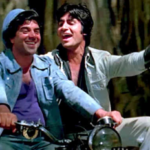
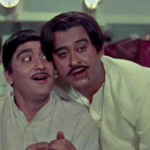
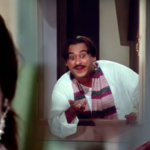

About Kishore Kumar
Kishore Kumar was born as Abhas Kumar Ganguly on 4 August 1929 in Khandwa, Madhya Pradesh, India. He was born into the Ganguly family. His father, Kunjalal Ganguly, was a lawyer, while his elder brothers Ashok Kumar and Anup Kumar were also associated with the Hindi film industry.
Although Kishore Kumar initially wanted to become a singer, he entered the film industry through acting. His elder brother Ashok Kumar was already a major film star, which helped Kishore enter Bombay's film world.
He began his film career as an actor and later established himself as a playback singer. His early singing was influenced by K. L. Saigal, whom he greatly admired. However, Kishore gradually developed his own unique vocal identity rather than becoming merely an imitator.
Early Musical Career
Kishore Kumar's early playback career developed during the 1940s and 1950s. Initially, he was not regarded as one of the leading playback singers because the Hindi film industry was dominated by voices such as Mohammed Rafi, Mukesh, and Talat Mahmood.
His career changed significantly in the 1960s. Songs such as “Ajnabi Tum Jaane Pehchaane Se,” “Gaata Rahe Mera Dil,” and other successful recordings helped establish him as a major playback singer.
His association with composer S. D. Burman proved especially important. Burman encouraged Kishore to sing naturally in his own voice, helping him move away from his earlier K. L. Saigal-inspired style.
Major Breakthrough
Kishore Kumar's biggest transformation as a playback singer came during the late 1960s and early 1970s.
The success of “Roop Tera Mastana” from Aradhana (1969), picturized on Rajesh Khanna, became a landmark in his career. The song won him his first Filmfare Award for Best Male Playback Singer.
His collaboration with Rajesh Khanna became one of the most successful singer-actor partnerships in Hindi cinema. Songs such as “Mere Sapno Ki Rani,” “Yeh Jo Mohabbat Hai,” “O Mere Dil Ke Chain,” “Chala Jata Hoon,” and “Zindagi Ek Safar Hai Suhana” became iconic.
Popular Songs
Some of Kishore Kumar's most memorable songs include:
- Roop Tera Mastana — Aradhana
- Mere Sapno Ki Rani — Aradhana
- O Mere Dil Ke Chain — Mere Jeevan Saathi
- Yeh Jo Mohabbat Hai — Kati Patang
- Zindagi Ek Safar Hai Suhana — Andaz
- Chookar Mere Man Ko — Yaarana
- Agar Tum Na Hote — Agar Tum Na Hote
- Khaike Paan Banaraswala — Don
- My Heart Is Beating — Julie
- Pal Pal Dil Ke Paas — Blackmail
- Neele Neele Ambar Par — Kalakaar
- Humein Tumse Pyaar Kitna — Kudrat
- Aane Wala Pal Jaane Wala Hai — Gol Maal
- Zindagi Ke Safar Mein — Aap Ki Kasam
- Musafir Hoon Yaaron — Parichay
- Yeh Shaam Mastani — Kati Patang
- Pyar Deewana Hota Hai — Kati Patang
- O Saathi Re — Muqaddar Ka Sikandar
- Aap Ke Anurodh Pe — Anurodh
- Rimjhim Gire Saawan — Manzil
Kishore Kumar and Rajesh Khanna
Kishore Kumar's voice became strongly associated with Rajesh Khanna, particularly during the actor's extraordinary popularity in the late 1960s and 1970s.
Their collaboration produced numerous evergreen songs, including:
- Mere Sapno Ki Rani
- Roop Tera Mastana
- Yeh Shaam Mastani
- O Mere Dil Ke Chain
- Zindagi Ek Safar Hai Suhana
- Kuchh Toh Log Kahenge
- Chala Jata Hoon
- Pyar Deewana Hota Hai
This singer-actor combination became one of the most successful musical partnerships in Hindi cinema.
Kishore Kumar and Amitabh Bachchan
Kishore Kumar also became the principal playback voice for Amitabh Bachchan during the superstar's peak years.
Their memorable collaborations include:
- My Name Is Anthony Gonsalves — Amar Akbar Anthony
- Khaike Paan Banaraswala — Don
- Pag Ghunghroo Baandh — Namak Halaal
- Rote Rote Hansna Seekho — Andhaa Kaanoon
- O Saathi Re — Muqaddar Ka Sikandar
- Sara Zamana — Yaarana
- De De Pyar De — Sharaabi
- Apni To Jaise Taise — Laawaris
His powerful and energetic voice suited Amitabh Bachchan's screen persona particularly well.
Versatility as a Singer
One of Kishore Kumar's greatest strengths was his versatility. He could sing romantic melodies, emotional songs, philosophical compositions, comic numbers, energetic songs, and melancholic ballads with equal ease.
His singing style included:
- Romantic songs
- Sad and emotional songs
- Philosophical songs
- Comic songs
- Rock and Western-influenced music
- Yodeling
- Classical-influenced melodies
- Duets
- Devotional and inspirational compositions
His distinctive yodeling technique became one of his trademarks and helped differentiate his voice from other major playback singers of his generation.
Famous Duets
Kishore Kumar recorded memorable duets with many leading female playback singers, particularly Lata Mangeshkar, Asha Bhosle, and Suman Kalyanpur.
Some popular duet recordings include:
- Kora Kagaz Tha Yeh Man Mera — with Lata Mangeshkar
- Tere Bina Zindagi Se — with Lata Mangeshkar
- Aap Ki Aankhon Mein Kuch — with Lata Mangeshkar
- Gaata Rahe Mera Dil — with Lata Mangeshkar
- Panna Ki Tamanna Hai — with Lata Mangeshkar
- Jaaneman Tum Kamaal Karti Ho — with Asha Bhosle
- Khaali Haath Shaam Aayi Hai — with Asha Bhosle
- Tum Aa Gaye Ho Noor Aa Gaya — with Lata Mangeshkar
Composer, Filmmaker and Actor
Kishore Kumar was much more than a playback singer. He also worked as an actor, director, producer, screenwriter, composer, and lyricist.
Some films associated with him as a filmmaker or producer include:
- Chalti Ka Naam Zindagi
- Door Gagan Ki Chhaon Mein
- Jhumroo
- Badhti Ka Naam Dadhi
- Door Ka Rahi
He composed and performed music for several of his own films and created a distinctive style that combined humor, experimentation, and music.
Awards & Recognition
Kishore Kumar won the Filmfare Award for Best Male Playback Singer eight times, making him one of the most decorated male playback singers in the history of the award.
His Filmfare-winning songs include:
- Roop Tera Mastana — Aradhana
- Dil Aisa Kisi Ne Mera Toda — Amanush
- Khaike Paan Banaraswala — Don
- Agar Tum Na Hote — Agar Tum Na Hote
- Pag Ghungroo Baandh — Namak Halaal
- Humein Tumse Pyaar Kitna — Kudrat
- Saagar Kinare Dil Yeh Pukare — Saagar
- Mere Naina Sawan Bhadon — Mehbooba
He was also honored with the Lata Mangeshkar Award by the Government of Madhya Pradesh.
Musical Legacy
Kishore Kumar remains one of the most influential voices in Indian film music. His ability to sing with both technical control and spontaneous emotion made his recordings exceptionally distinctive.
His songs continue to be played on radio, television, streaming platforms, concerts, and music programs. His voice remains particularly associated with the golden period of Hindi cinema from the 1970s through the early 1980s.
Birth Details
Full Name: Abhas Kumar Ganguly
Popular Name: Kishore Kumar
Date of Birth: 4 August 1929
Birth Place: Khandwa, Madhya Pradesh, India
Profession: Playback Singer, Actor, Music Director, Composer, Filmmaker, Producer, Lyricist
Languages: Hindi and other Indian-language music
Genres: Bollywood, Film Music, Romantic, Classical-influenced, Western-influenced
Years Active: 1946–1987
Death Details
Death Date: 13 October 1987
Death Place: Mumbai, Maharashtra, India
Age: 58 years