
 Geeton ka Sangrah
Popular:
Jay Mata Dee He Ambe Baliharee (जय माता दी हे अम्बे बलिहारी)
— Sanjeevani Bhelande
Trending:
Jaaneman Jaaneman (जानेमन जानेमन)
— Kavita Krishnamurthy
Added:
Pagal Hua Deewana Hua (पागल हुआ दीवाना हुआ)
— Jaspinder Narula
Popular:
Ladakee Ladakee Too Woh Ladakee (लड़की लड़की, तू वो लड़की)
— Abhijeet Bhattacharya
Classic:
Baabaa Naanak Dukhiyaan De Naath Ve (बाबा नानक दुखियां दे नाथ वे)
— Kishanpal Singh
Added:
Hum Hai Banaras Ke Bhaiya (हम हैं बनारस के भैया)
— Amit Kumar
Added:
Tere Dil Pe Naam Na Likh Doon (तेरे दिल पे नाम ना लिख दूँ)
— Alka Yagnik
New:
Area Ka Hero (एरिया का हीरो)
— Hema Sardesai
Added:
Chandi Ki Daal Par (चांदी की डाल पर)
— Alka Yagnik
Popular:
Hello Brother (हैलो ब्रदर)
— Jaspinder Narula
Tere Ghar Ke Samne (1963) Songs Lyrics
Tere Ghar Ke Samne is a 1963 Hindi romantic comedy film directed by Vijay Anand and produced by Dev Anand. The film stars Dev Anand as Rakesh Anand Kumar and Nutan as Sulekha, with Rajendra Nath, Om Prakash and Harindranath Chattopadhyay in important supporting roles. The music was composed by S. D. Burman, with lyrics by Hasrat Jaipuri.
The story follows Rakesh, a talented architect who returns to India after studying in the United States. He falls in love with Sulekha, the daughter of his father's business rival. The romantic situation becomes complicated when both fathers unknowingly hire Rakesh to construct houses that will compete with each other.
The film combines romance, comedy, family rivalry and architectural ambition, with the Dev Anand–Nutan pairing and S. D. Burman's memorable music forming the heart of the film.

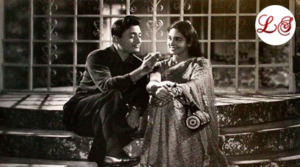





About the Movie Tere Ghar Ke Samne (1963)
The story begins with Rakesh Anand Kumar, played by Dev Anand, a young architect who has returned to India after completing his studies in the United States.
Rakesh is talented, modern and ambitious. He dreams of creating innovative and beautiful buildings and soon becomes a sought-after architect.
Rakesh's father is Lala Jagannath, a wealthy businessman with a strong and stubborn personality.
Jagannath has a long-standing rivalry with another wealthy businessman, Seth Karamchand.
The two men live their lives as bitter rivals and are constantly trying to outdo each other.
When both men acquire adjoining plots of land, their rivalry takes a new turn.
Each wants to build a magnificent house that will be bigger and more impressive than the other's.
Ironically, both men hire Rakesh as their architect without realizing that he is working for the other side.
Rakesh begins designing the houses according to their individual demands.
During this process, he meets Sulekha, Karamchand's daughter, played by Nutan.
Rakesh and Sulekha are immediately attracted to each other.
Their relationship gradually develops into love.
However, neither initially realizes that their fathers are bitter enemies.
When the truth eventually comes out, the situation becomes extremely complicated.
Jagannath and Karamchand strongly oppose the relationship because neither is willing to accept the daughter or son of his lifelong rival.
Rakesh and Sulekha, however, refuse to give up their love.
They try various ways to bring their fathers together and end their unnecessary rivalry.
The rivalry produces several humorous situations, especially because both fathers remain determined to build the grandest possible house directly opposite one another.
Rakesh finds himself caught between his professional responsibilities, his loyalty toward his father and his love for Sulekha.
The conflict eventually reaches a point where the families must choose between their old hatred and the happiness of their children.
Through a series of comic and emotional situations, the fathers gradually realize that their rivalry is meaningless compared with the genuine love between Rakesh and Sulekha.
The story ultimately ends with the family conflict being resolved and the lovers receiving acceptance.
The film's central message is that love and family happiness are more important than pride, rivalry and social status.
Main Cast
- Dev Anand — Rakesh Anand Kumar
- Nutan — Sulekha
- Rajendra Nath — Captain Ranjeet "Ronny"
- Om Prakash — Lala Jagannath
- Harindranath Chattopadhyay — Seth Karamchand
- Zarine Katrak — Jenny Fernandes
- Rashid Khan — Madan Gopal Basuriwala
- Pratima Devi — Mrs. Karamchand
- Mumtaz Begum — Mrs. Jagannath
- Jankidas — Auctioneer
Director & Production
Director: Vijay Anand
Producer: Dev Anand
Associate Producer: Kalpana Kartik
Writer: Vijay Anand
Music: S. D. Burman
Lyrics: Hasrat Jaipuri
Cinematography: V. Ratra
Editor: Babu Sheikh
Production Company: Navketan Films / Navketan International Films
Language: Hindi
Genre: Romantic Comedy, Musical, Drama
Runtime: Approximately 149 minutes according to IMDb.
Music
The music of Tere Ghar Ke Samne was composed by S. D. Burman, with lyrics by Hasrat Jaipuri. The soundtrack is one of the film's most enduring attractions.
Popular Songs
- Tere Ghar Ke Samne
- Dil Ka Bhanwar Kare Pukar
- Ek Ghar Banaunga
- Dekho Rootha Na Karo
- Sunoji Ek Baat
- Tu Kahan Yeh Bata
- Dil Ki Manzil Kuchh Aisi Hai Manzil
The title song “Tere Ghar Ke Samne” is particularly memorable for its romantic portrayal of Rakesh and Sulekha. The soundtrack features legendary voices including Mohammed Rafi and Lata Mangeshkar.
Themes
Tere Ghar Ke Samne explores:
- Love and romance
- Family rivalry
- Parental opposition
- Forgiveness
- Family relationships
- Pride and ego
- Modern architecture
- Social relationships
- Reconciliation
The film humorously shows how parental rivalry can become an obstacle to the happiness of their children.
Legacy
Tere Ghar Ke Samne is regarded as one of the memorable romantic comedies of 1960s Hindi cinema. It brought together Dev Anand and Nutan under the direction of Vijay Anand and became a major hit. It was reportedly among the highest-grossing Hindi films of 1963.
The film is also remembered for Vijay Anand's stylish direction, its witty comedy and the evergreen music of S. D. Burman. The University of Iowa's Indian Cinema archive describes it as a romantic comedy centered around two feuding wealthy families and Rakesh's relationship with Sulekha.