
 Geeton ka Sangrah
Popular:
Kyon Chhupate Ho Mann Ki Baat (क्यों छुपाते हो मन की बात)
— Anuradha Paudwal
Popular:
Khushiyan Aur Gam (खुशियाँ और ग़म)
— Anuradha Paudwal
Popular:
Kehna Hai Tumse Kehna (कहना है, तुमसे कहना है)
— Hema Sardesai
Added:
Kali Nagin Ke Jaisi (काली नागिन के जैसी)
— Kavita Krishnamurthy
New:
Chaha Hai Tujhko (चाहा है तुझको)
— Anuradha Paudwal
Trending:
Kyaa Dekh Rahe Ho Tum (क्या देख रहे हो तुम)
— Madhushree
Trending:
Ishq Bina Ishq Bina (इश्क़ बिना, इश्क़ बिना)
— Kavita Krishnamurthy
Popular:
Kariye Na (करिये ना)
— Alka Yagnik
Added:
Ramta Jogi (रामता जोगी)
— Alka Yagnik
Added:
Ni Main Samajh Gayee (नि में समझ गयी)
— Richa Sharma
Teen Devian (1965) Songs Lyrics
Teen Devian is a 1965 Hindi romantic musical film directed and produced by Amarjeet, with Dev Anand also contributing as an uncredited/ghost director. The film stars Dev Anand, Nanda, Simi Garewal and Kalpana Mohan in the lead roles, with I. S. Johar, Harindranath Chattopadhyay and Sulochana in supporting roles. The music was composed by S. D. Burman, while the lyrics were written by Majrooh Sultanpuri.
The story follows Devdutt Anand, a struggling poet who unexpectedly attracts three women—Nanda, Kalpana and Simi. As his poetry brings him fame, he finds himself caught in a complicated romantic situation and must ultimately decide whom he truly loves.

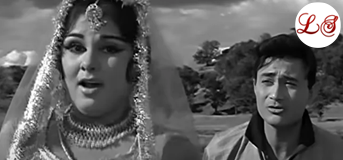
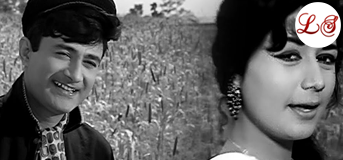
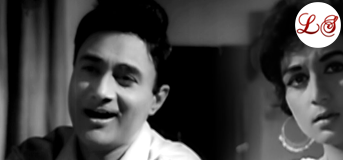
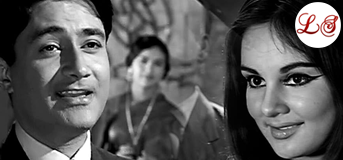
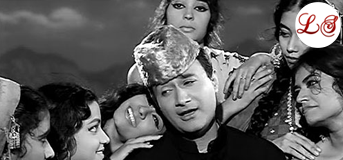
About the Movie Teen Devian (1965)
The story revolves around Devdutt Anand, played by Dev Anand, who works for a company that sells musical instruments.
Devdutt is talented but somewhat careless about his job and is frequently late for work. His employer, I. S. Johar, is initially frustrated with him.
Everything changes when Johar discovers that Devdutt has a talent for writing poetry.
Johar encourages Devdutt to write poems and gets them published. Devdutt's poetry becomes popular, bringing him recognition and helping Johar's business.
As Devdutt's reputation grows, he begins attracting the attention of several women.
While travelling home on a BEST bus, he meets Nanda, a young woman who has recently moved into his neighbourhood. The two become attracted to each other.
Soon afterward, Devdutt encounters Kalpana, a Bollywood actress whose car breaks down.
Devdutt helps her, and Kalpana discovers that he is a poet. She becomes interested in him and arranges another meeting.
Their relationship also begins developing into a romantic one.
Devdutt's complicated romantic life becomes even more difficult when he is asked to deliver a piano to the home of Simi, a wealthy woman who is also impressed by his poetry.
Simi invites Devdutt to a party, and she too becomes attracted to him.
Devdutt now finds himself romantically involved with three very different women.
Each woman has her own personality and appeal, and Devdutt genuinely enjoys spending time with all three.
However, he realizes that he cannot marry all three women.
His romantic situation becomes increasingly confusing as each woman develops stronger feelings for him.
Devdutt must therefore confront the consequences of his relationships and determine which woman he truly wants as his life partner.
The film's central conflict is not simply about choosing between three women; it also explores love, attraction, emotional maturity and the difference between temporary fascination and genuine commitment.
The story ultimately forces Devdutt to make an important decision about his future and his true feelings.
Main Cast
- Dev Anand — Devdutt Anand
- Nanda — Nanda
- Simi Garewal — Simi / Radha Rani
- Kalpana Mohan — Kalpana
- I. S. Johar — I. S. Johar
- Harindranath Chattopadhyay — Mr. Pinto
- Sulochana — Mrs. Pinto
- Rashid Khan — Hypnotist
- Jankidas — Bhutta seller
- Ameen Sayani — Narrator/Commentator (voice)
Director & Production
Director: Amarjeet
Producer: Amarjeet
Additional/Uncredited Direction: Dev Anand
Writers: Sadashiv Brahmam, Vrajendra Gaur
Music: S. D. Burman
Lyrics: Majrooh Sultanpuri
Cinematography: Pratap Sinha
Editor: Pran Mehra
Production Company: Nalanda
Language: Hindi
Genre: Romance, Musical, Drama
Runtime: Approximately 121 minutes
Music
The music of Teen Devian was composed by legendary music director S. D. Burman, with lyrics by Majrooh Sultanpuri. The soundtrack features the voices of Kishore Kumar, Lata Mangeshkar, Mohammed Rafi and Asha Bhosle.
Popular Songs
- Khwab Ho Tum Ya Koi Haqeeqat
- Aise To Na Dekho
- Likha Hai Teri Aankhon Mein
- Kahin Bekhayal Hokar
- Are Yaar Meri Tum Bhi Ho Ghazab
- Uff Kitni Thandi Hai Yeh Rut
- Subah Pe Jis Tarha
“Khwab Ho Tum Ya Koi Haqeeqat” sung by Kishore Kumar is one of the film's most memorable songs and remains closely associated with Dev Anand's romantic screen persona.
Themes
Teen Devian explores:
- Love and attraction
- Romantic relationships
- Choice and commitment
- Poetry and creativity
- Fame and success
- Modern relationships
- Emotional confusion
- Individuality
The film's central idea revolves around a man who attracts three women and must eventually decide who he truly wants to spend his life with.
Legacy
Teen Devian is remembered as one of Dev Anand's distinctive romantic films of the 1960s, combining his charismatic screen presence with a modern romantic storyline.
The film is particularly notable for bringing together Dev Anand, Nanda, Simi Garewal and Kalpana Mohan, while its soundtrack by S. D. Burman and Majrooh Sultanpuri remains one of its strongest features.
The film also has historical importance in Dev Anand's career because, although Amarjeet was officially credited as director, Dev Anand later revealed that he had ghost-directed the film, making it an early step toward his later official directorial debut with Prem Pujari (1970).