
 Geeton ka Sangrah
New:
Na Kajare Ki Dhar (ना कजरे की धार) (Part – 2)
— Sadhana Sargam
New:
Na Kajare Ki Tasveer Teri (ना कजरे की तस्वीर तेरी)
— Pankaj Udhas
New:
Main Cheez Badi Hoon Mast Mast (मैं चीज़ बड़ी हूँ मस्त मस्त)
— Kavita Krishnamurthy
New:
Dil Har Koi Deta Hain (दिल हर कोई देता हैं)
— Alka Yagnik
New:
Ae Kash Kahi Aisa Hota (ऐ काश कही ऐसा होता)
— Kumar Sanu
Added:
Subah Se Lekar Shaam Tak (सुबह से लेकर शाम तक)
— Sadhana Sargam
New:
Na Kajre Ki Dhar (ना कजरे की धार)
— Pankaj Udhas
Added:
Tip Tip Barsa Paani (टिप टिप बरसा पानी)
— Alka Yagnik
Classic:
Tu Chiz Badi Hai Mast Mast (तू चीज़ बड़ी है मस्त मस्त)
— Kavita Krishnamurthy
Classic:
Kya Sochta Hai Ae Dil (क्या सोचता हैं ऐ दिल)
— Anuradha Paudwal
Krantiveer (1994) Songs Lyrics
Krantiveer is a 1994 Hindi action-crime drama directed and produced by Mehul Kumar. The film stars Nana Patekar, Dimple Kapadia, Atul Agnihotri and Mamta Kulkarni in the lead roles, with Danny Denzongpa, Paresh Rawal, Farida Jalal and Tinnu Anand in important supporting roles. The music was composed by Anand–Milind, with lyrics by Sameer.
The story follows Pratap Narayan Tilak, a rebellious and unemployed man who is disowned by his parents and eventually settles in a small village controlled by criminals and corrupt politicians. His life changes after he meets journalist Megha Dixit, whose commitment to justice inspires him to fight against corruption and stand up for poor and oppressed people.
Krantiveer combines action, crime, social drama and patriotism, with a strong message about corruption, social injustice, courage and standing up for one's rights.

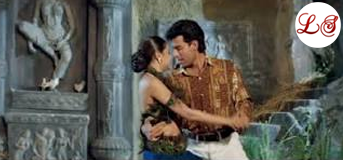
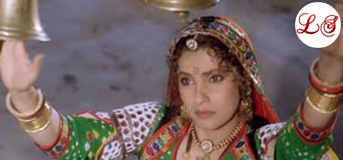
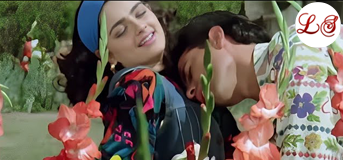
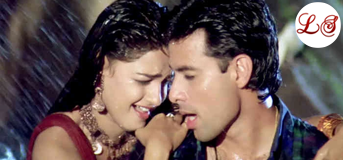
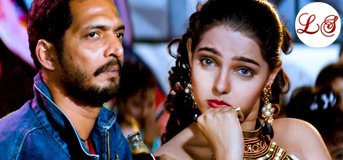
About the Movie Krantiveer (1994)
The film begins with Pratap Narayan Tilak, played by Nana Patekar, as a troubled young man who has been disowned by his parents. He grows up rebellious and develops a careless attitude toward life.
Pratap eventually arrives in a small village where powerful criminals and corrupt politicians control the local population. He becomes unemployed and spends much of his time drinking and avoiding responsibility.
His life begins to change when he meets Megha Dixit, a courageous journalist played by Dimple Kapadia. Megha is determined to expose the corruption and criminal activities affecting ordinary people.
Initially, Pratap has little interest in social issues. However, Megha's determination and idealism gradually influence him. He begins to understand the suffering of the poor and realizes that remaining silent allows corrupt people to continue exploiting society.
Pratap eventually decides to stand against the powerful forces controlling the village. His transformation from a careless, directionless man into a courageous fighter becomes the central theme of the film.
His struggle brings him into conflict with Chatur Singh Chita, played by Danny Denzongpa, and other powerful criminals and politicians. Pratap faces threats, violence and betrayal but refuses to surrender.
Meanwhile, Atul Dhayal, played by Atul Agnihotri, and Mamta, played by Mamta Kulkarni, are also connected to the story and its social conflicts.
As the situation becomes more dangerous, Pratap realizes that defeating corruption requires courage and sacrifice. He chooses to fight even when he knows that his own life is at risk.
The climax brings Pratap face-to-face with the forces he has been fighting. His determination turns him into a symbol of resistance for the people around him.
The film ultimately emphasizes that ordinary people can challenge injustice when they refuse to remain silent.
Main Cast
- Nana Patekar — Pratap Narayan Tilak
- Dimple Kapadia — Megha Dixit
- Atul Agnihotri — Atul Dhayal
- Mamta Kulkarni — Mamta
- Danny Denzongpa — Chatur Singh Chita
- Paresh Rawal — Laxmidas Dhayal
- Farida Jalal — Mrs. Tilak
- Tinnu Anand — Yograj
- Mushtaq Khan — Babbanrao Deshmukh
- Ishrat Ali — Chandrasen Azaad
- Vikas Anand — Judge Hukam Ali Javed
- Mahesh Anand — Vaishiram
- Shafi Inamdar — Interviewer
- Viju Khote — Dr. Vishwanath
Director & Production
Director: Mehul Kumar
Producer: Mehul Kumar
Production Banner: Mehul Movies Pvt. Ltd.
Writer: K. K. Singh
Music: Anand–Milind
Lyrics: Sameer
Cinematography: Russi Billimoria
Editing: Yusuf Sheikh
Language: Hindi
Genre: Action, Crime, Drama, Patriotic, Social
Runtime: Approximately 147 minutes
Music
The music of Krantiveer was composed by Anand–Milind, with lyrics by Sameer. The songs complement the film's combination of romance, social drama and patriotic themes.
Popular Songs
- Jeevan Se Bhari Teri Aankhen
- Phoolon Sa Chehra Tera
- Chhoti Si Aasha
- Krantiveer
- Love Rap
- Ja Ja Re Ja
- Aaya Aaya Aaya
- Kya Cheez Hai Mohabbat
The soundtrack helped balance the film's intense social and action-oriented storyline with romantic and emotional moments.
Themes
Krantiveer explores:
- Corruption
- Social injustice
- Poverty and exploitation
- Political power
- Courage and sacrifice
- Patriotism
- Justice
- Transformation
- Standing up for the oppressed
The central message is that people should not remain silent in the face of injustice and corruption.
Legacy
Krantiveer became a major commercial success and was the third-highest-grossing film of 1994 according to Box Office India. The film is also classified as a blockbuster by Box Office India.
Nana Patekar's portrayal of Pratap Narayan Tilak became one of the most memorable performances of his career. The film's powerful dialogues and socially charged storyline contributed significantly to its lasting popularity.
The film received several major awards, including four Filmfare Awards, three Star Screen Awards and the National Film Award for Best Film on Other Social Issues.
The film was later remade in Telugu as Punya Bhoomi Naa Desam (1995) and in Kannada as Parodi (2007).