
 Geeton ka Sangrah
New:
Na Kajare Ki Dhar (ना कजरे की धार) (Part – 2)
— Sadhana Sargam
Popular:
Na Kajare Ki Tasveer Teri (ना कजरे की तस्वीर तेरी)
— Pankaj Udhas
Classic:
Main Cheez Badi Hoon Mast Mast (मैं चीज़ बड़ी हूँ मस्त मस्त)
— Kavita Krishnamurthy
Added:
Dil Har Koi Deta Hain (दिल हर कोई देता हैं)
— Alka Yagnik
Popular:
Ae Kash Kahi Aisa Hota (ऐ काश कही ऐसा होता)
— Kumar Sanu
Popular:
Subah Se Lekar Shaam Tak (सुबह से लेकर शाम तक)
— Sadhana Sargam
Classic:
Na Kajre Ki Dhar (ना कजरे की धार)
— Pankaj Udhas
Popular:
Tip Tip Barsa Paani (टिप टिप बरसा पानी)
— Alka Yagnik
Trending:
Tu Chiz Badi Hai Mast Mast (तू चीज़ बड़ी है मस्त मस्त)
— Kavita Krishnamurthy
New:
Kya Sochta Hai Ae Dil (क्या सोचता हैं ऐ दिल)
— Anuradha Paudwal
Junglee (1961) Songs Lyrics
Junglee is a 1961 Hindi romantic comedy-drama directed and produced by Subodh Mukherjee. The film stars Shammi Kapoor and Saira Banu in the lead roles, with Shashikala, Anoop Kumar and Lalita Pawar in important supporting roles. The music was composed by Shankar–Jaikishan, with lyrics by Shailendra and Hasrat Jaipuri. The film marked Saira Banu's acting debut in Hindi cinema.
The story follows Chandrashekhar "Shekhar", a wealthy businessman from a strict aristocratic family where laughter and carefree behaviour are discouraged. His life changes when he travels to Kashmir and meets Rajkumari, a lively young woman who teaches him to enjoy life and express his feelings.
Junglee combines romance, comedy, family drama and music, and is particularly remembered for Shammi Kapoor's energetic performance and the iconic song “Chahe Koi Mujhe Junglee Kahe.” The film became one of the major successes of Hindi cinema in 1961.


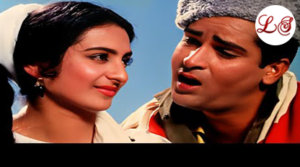
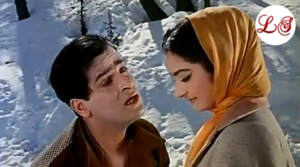
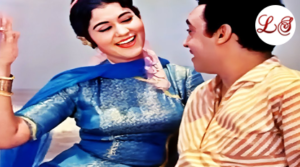


About the Movie Junglee (1961)
The story revolves around Chandrashekhar, popularly known as Shekhar, played by Shammi Kapoor. He belongs to a wealthy and aristocratic family headed by his extremely strict mother, played by Lalita Pawar.
Shekhar has been brought up according to rigid family rules. In his household, people are expected to behave with dignity and restraint, and even laughing openly is considered improper.
Shekhar's younger sister Mala, played by Shashikala, is completely different. She is cheerful, free-spirited and secretly in love with Jeevan, a young man who works for Shekhar.
When their mother discovers Mala's relationship, she becomes angry and asks Shekhar to take his sister away to Kashmir so that she will forget Jeevan. She also expects Shekhar to marry a woman from an aristocratic or royal family.
In Kashmir, Shekhar meets Rajkumari "Raj", played by Saira Banu, the lively daughter of a local doctor. Raj is completely different from the reserved people in Shekhar's family. Her cheerful personality gradually attracts him.
At first, Shekhar tries to maintain his distance because he believes that his mother would never approve of a relationship with a woman outside their social circle.
However, circumstances bring Shekhar and Raj together during a snowstorm. Spending time with her allows Shekhar to discover a completely different side of himself. He begins to laugh, enjoy life and express his emotions freely.
When Shekhar returns home, his dramatic change shocks his mother. He tells her that he has fallen in love with Raj, but his mother assumes that Raj must belong to a royal family because of her name.
When she discovers Raj's true background, she refuses to accept the relationship.
Meanwhile, Mala's own love story with Jeevan creates another family conflict. Eventually, Shekhar's mother realizes that a person's true worth is determined not by social status or titles but by character and the goodness of the heart.
She finally accepts Raj, while Mala and Jeevan are also accepted into the family. The once-strict household finally becomes a place where love, happiness and laughter are welcomed.
Main Cast
- Shammi Kapoor — Chandrashekhar "Shekhar"
- Saira Banu — Rajkumari "Raj"
- Shashikala — Mala
- Anoop Kumar — Jeevan
- Lalita Pawar — Shekhar and Mala's mother
- Azra — The Princess
- Moni Chatterjee — Raj's father / Doctor
- Helen — Miss Suku
- Asit Sen — Doctor
- Rajan Haksar — Princess's brother
Director & Production
Director: Subodh Mukherjee
Producer: Subodh Mukherjee
Production Banner: Subodh Mukherji Productions
Story: Subodh Mukherjee
Screenplay: Subodh Mukherjee
Dialogues: Agha Jani Kashmiri
Music: Shankar–Jaikishan
Lyrics: Shailendra, Hasrat Jaipuri
Cinematography: N. V. Srinivas
Editing: V. K. Naik
Language: Hindi
Genre: Comedy, Romance, Musical, Drama
Runtime: Approximately 150 minutes
Music
The music of Junglee was composed by the legendary duo Shankar–Jaikishan, with lyrics by Shailendra and Hasrat Jaipuri. The soundtrack became one of the film's biggest attractions.
Popular Songs
- Chahe Koi Mujhe Junglee Kahe — Mohammed Rafi
- Ehsaan Tera Hoga Mujh Par — Mohammed Rafi
- Ehsaan Tera Hoga Mujh Par — Lata Mangeshkar
- Din Saara Guzara Tore Angana — Lata Mangeshkar & Mohammed Rafi
- Nain Tumhare Mazedaar O Janab-e-Aali — Lata Mangeshkar & Mohammed Rafi
- Ja Ja Ja Mere Bachpan — Lata Mangeshkar
- Ai Ai Aa Sukoo Sukoo — Mohammed Rafi
The energetic “Chahe Koi Mujhe Junglee Kahe” became particularly iconic and helped establish Shammi Kapoor's flamboyant screen image.
Themes
Junglee explores:
- Love beyond social status
- Family traditions
- Freedom and individuality
- Changing social values
- Romance
- Family relationships
- Happiness and self-expression
- Acceptance and understanding
The central message is that true happiness comes from love, freedom and genuine human relationships rather than rigid social rules or status.
Legacy
Junglee became one of the significant successes of 1961 Hindi cinema and helped establish Shammi Kapoor's energetic and rebellious romantic persona. It was among the highest-grossing Hindi films of that year.
The film is also historically important because it marked Saira Banu's debut. She received a Filmfare nomination for Best Actress for her performance. The film also won the Filmfare Award for Best Sound Recordist for Kuldeep Singh.
Its soundtrack by Shankar–Jaikishan remains one of the most memorable albums of early-1960s Hindi cinema. Songs such as “Chahe Koi Mujhe Junglee Kahe” and “Ehsaan Tera Hoga Mujh Par” have remained popular across generations.
The film's Kashmir setting, romantic storyline, comedy and musical energy contributed to its enduring appeal.