
 Geeton ka Sangrah
Popular:
Sooryavansham (सूर्यवंशम)
— Sonu Nigam
Trending:
Har Subah (हर सुबह)
— K. S. Chithra
Classic:
Kore Kore Sapane (कोरे कोरे सपने)
— Anuradha Paudwal
Added:
Dil Mere Tu Deewana (दिल मेरे तू दीवाना)
— Kumar Sanu
Trending:
Peepal Ke Patwa (पीपल के पतवा)
— Jaspinder Narula
New:
Chori Se Chori Se (चोरी से चोरी से)
— Amitabh Bachchan
Popular:
Sanson Ki Mala (साँसों की माला)
— Madhur Sharma
New:
Guzarish (गुजारिश)
— Satinder Sartaaj
Classic:
Aaj Imtihan Hai (आज इम्तिहान हैं)
— Lata Mangeshkar
New:
Ae Yaar Sun Yaari Teri (ये यार सुन यारी तेरी)
— Asha Bhosle
Dilwale Dulhania Le Jayenge (1995) Songs Lyrics
Dilwale Dulhania Le Jayenge (1995), popularly known as DDLJ, is one of the most iconic romantic films in the history of Hindi cinema. Directed by Aditya Chopra and produced by Yash Chopra, the film stars Shah Rukh Khan as Raj Malhotra and Kajol as Simran Singh. It was released on 20 October 1995. (yashrajfilms.com)
The story follows Raj and Simran, two young Indians living in London who meet during a European trip. Although they initially dislike each other, their journey together gradually develops into friendship and then love.
Simran's strict father, Baldev Singh, has already arranged her marriage to the son of a family friend in India. When Simran falls in love with Raj, she faces a difficult choice between love and family expectations.
Raj, however, refuses to simply run away with Simran. Instead, he decides to win the approval of her family and marry her with their blessings.
The film beautifully combines romance, family values, Indian traditions, humour, music, and the experience of Indians living abroad. Its central message is that true love does not necessarily require rejecting one's family—it can also mean earning the family's trust and acceptance.
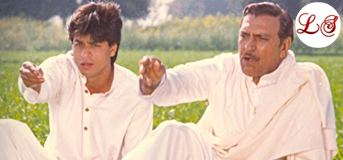
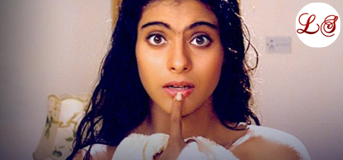
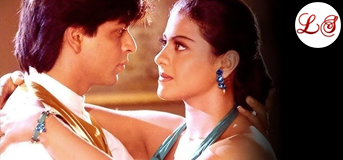
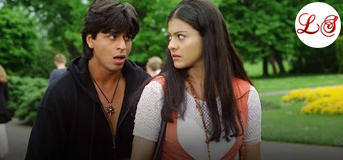
About the Movie Dilwale Dulhania Le Jayenge (1995)
Movie: Dilwale Dulhania Le Jayenge
Popular Name: DDLJ
Release Date: 20 October 1995
Language: Hindi
Genre: Romantic Drama, Romance, Musical, Comedy
Director: Aditya Chopra
Producer: Yash Chopra
Production Company: Yash Raj Films
Writer: Aditya Chopra
Music: Jatin–Lalit
Lyrics: Anand Bakshi
Cinematography: Manmohan Singh
Editing: Keshav Naidu
Country: India
Runtime: Approximately 189 minutes
Main Cast
- Shah Rukh Khan as Raj Malhotra
- Kajol as Simran Singh
- Amrish Puri as Baldev Singh
- Farida Jalal as Lajwanti "Lajjo" Singh
- Anupam Kher as Dharamvir Malhotra
- Pooja Ruparel as Rajeshwari "Chutki" Singh
- Parmeet Sethi as Kuljeet Singh
- Satish Shah as Ajit Singh
- Mandira Bedi as Preeti
- Achala Sachdev as Simran's grandmother
Story Overview
Simran Singh is a young Indian woman living in London with her traditional Punjabi family. Her father, Baldev Singh, strongly believes in preserving Indian culture and values.
Simran dreams of experiencing love and romance before marriage. She asks her father for permission to travel across Europe with her friends.
During the trip, she meets Raj Malhotra, another young Indian living in London.
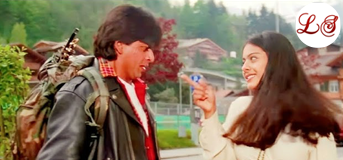
Their first meeting is far from romantic.
Raj enjoys teasing Simran, while Simran finds him irritating and irresponsible. As they continue travelling together, however, their relationship gradually changes.
The two begin to understand each other and eventually fall deeply in love.
When Simran returns home, she discovers that her father has already arranged her marriage to Kuljeet Singh, the son of an old family friend.
Baldev takes his family to Punjab for the wedding.
Simran is heartbroken because she believes she must give up Raj and obey her father.
Raj follows her to India.
However, he does not want to take Simran away. Instead, he decides to become part of her family and win Baldev's approval.
Raj gradually earns the trust of Simran's family and becomes close to them while secretly trying to keep his relationship with Simran alive.
The conflict reaches its emotional climax when Baldev discovers the truth.
Raj and Simran must finally face the decision that has been at the heart of the story: whether love can overcome family opposition.
In the iconic climax, Baldev finally recognizes Raj's sincerity and gives Simran permission to go with him.
The film ends with Simran running toward the departing train while Raj reaches out his hand to her.
Music
The music of Dilwale Dulhania Le Jayenge was composed by Jatin–Lalit, with lyrics by Anand Bakshi.
The soundtrack became one of the most successful Bollywood albums of the 1990s.
Popular Songs
- Tujhe Dekha To
- Mere Khwabon Mein
- Ho Gaya Hai Tujhko To Pyar Sajna
- Ruk Ja O Dil Deewane
- Zara Sa Jhoom Loon Main
- Mehndi Laga Ke Rakhna
- Ghar Aaja Pardesi
- The Dance of Envy
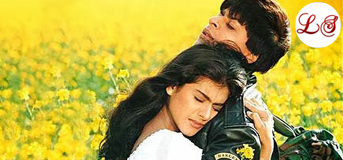
"Tujhe Dekha To", picturized on Shah Rukh Khan and Kajol against the famous mustard fields of Punjab, became one of the most recognizable romantic songs in Hindi cinema.
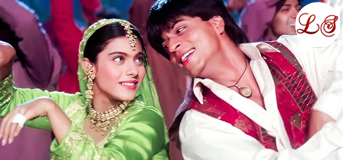
"Mehndi Laga Ke Rakhna" became an enduring favourite at Indian weddings and celebrations.
Themes
The major themes of Dilwale Dulhania Le Jayenge include:
- Love
- Family values
- Indian traditions
- Cultural identity
- Parental approval
- Marriage
- Sacrifice
- NRI life
- Generational differences
- Love versus arranged marriage
- Respect for parents
The film's most important idea is that love and family traditions do not necessarily have to be enemies.
Raj's goal is not to separate Simran from her family but to become worthy of being accepted by them.
Awards & Recognition
Dilwale Dulhania Le Jayenge received enormous critical and commercial recognition.
Filmfare Awards
The film won 10 Filmfare Awards, including:
- Best Film
- Best Director — Aditya Chopra
- Best Actor — Shah Rukh Khan
- Best Actress — Kajol
- Best Supporting Actress — Farida Jalal
- Best Supporting Actor — Amrish Puri
- Best Music Director — Jatin–Lalit
- Best Lyricist — Anand Bakshi
- Best Playback Singer — Udit Narayan
- Best Screenplay — Aditya Chopra
It was also awarded the National Film Award for Best Popular Film Providing Wholesome Entertainment.
Long-Running Theatrical Legacy
One of the most remarkable aspects of DDLJ is its extraordinary theatrical longevity.
The film famously continued to be screened at Maratha Mandir in Mumbai for decades after its original release, becoming a symbol of the enduring popularity of the film.
Its long theatrical run made DDLJ more than simply a successful 1990s film—it became a cultural phenomenon.