
 Geeton ka Sangrah
Added:
Na Kajare Ki Dhar (ना कजरे की धार) (Part – 2)
— Sadhana Sargam
Added:
Na Kajare Ki Tasveer Teri (ना कजरे की तस्वीर तेरी)
— Pankaj Udhas
Added:
Main Cheez Badi Hoon Mast Mast (मैं चीज़ बड़ी हूँ मस्त मस्त)
— Kavita Krishnamurthy
Trending:
Dil Har Koi Deta Hain (दिल हर कोई देता हैं)
— Alka Yagnik
Classic:
Ae Kash Kahi Aisa Hota (ऐ काश कही ऐसा होता)
— Kumar Sanu
Added:
Subah Se Lekar Shaam Tak (सुबह से लेकर शाम तक)
— Sadhana Sargam
Added:
Na Kajre Ki Dhar (ना कजरे की धार)
— Pankaj Udhas
Added:
Tip Tip Barsa Paani (टिप टिप बरसा पानी)
— Alka Yagnik
Classic:
Tu Chiz Badi Hai Mast Mast (तू चीज़ बड़ी है मस्त मस्त)
— Kavita Krishnamurthy
New:
Kya Sochta Hai Ae Dil (क्या सोचता हैं ऐ दिल)
— Anuradha Paudwal
Teesri Manzil (1966) Songs Lyrics
Teesri Manzil is a 1966 Hindi musical mystery-thriller directed by Vijay Anand and produced by Nasir Hussain. The film stars Shammi Kapoor as Anil Kumar Sona, popularly known as Rocky, and Asha Parekh as Sunita. Helen, Prem Nath, Prem Chopra, Iftekhar, Laxmi Chhaya and others appear in supporting roles. The music was composed by R. D. Burman, with lyrics by Majrooh Sultanpuri.
The story revolves around Sunita, whose sister Rupa mysteriously falls to her death from the third floor of a hotel in Mussoorie. Sunita believes that nightclub drummer Rocky is connected to her sister's death and sets out to discover the truth. What begins as a search for revenge gradually turns into a complicated mystery involving false identities, murder, romance and hidden motives.

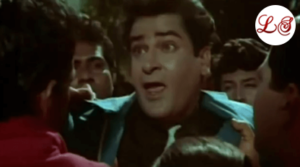

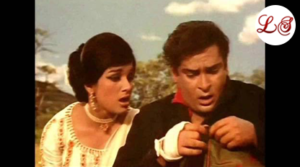
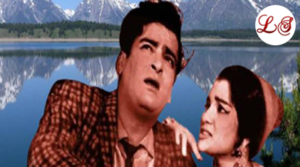
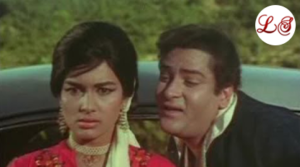
About the Movie Teesri Manzil (1966)
The story begins in Mussoorie, where a young woman named Rupa mysteriously falls from the third floor of a hotel and dies.
The police initially treat the incident as a possible suicide.
Rupa's younger sister Sunita, however, refuses to believe that her sister took her own life.
Before her death, Rupa had been involved with a nightclub drummer named Rocky.
Sunita becomes convinced that Rocky knows something about Rupa's death and blames him for the tragedy.
Determined to discover the truth and take revenge, Sunita travels to Mussoorie.
There she begins searching for Rocky.
Rocky is actually Anil Kumar Sona, a talented and charismatic drummer who performs at a nightclub.
Sunita initially approaches him with suspicion and hostility.
Rocky, however, introduces himself under another name and becomes involved with Sunita without revealing everything about his identity.
As the two spend more time together, their relationship changes.
Sunita gradually discovers that Rocky may not be the villain she originally believed him to be.
At the same time, Rocky becomes interested in Sunita and begins helping her investigate the circumstances surrounding Rupa's death.
Their investigation leads them toward the mysterious third floor of the hotel, where important clues about the tragedy are hidden.
The story introduces several suspicious characters, including Kunwar, Ramesh and others connected with the hotel and its surroundings.
Each character appears to have something to hide.
As Sunita and Rocky investigate further, they uncover a complicated web of deception, jealousy, revenge and murder.
The truth about Rupa's death gradually emerges.
Rocky's real identity and his connection to the events are also revealed.
Sunita realizes that her initial suspicion of Rocky was misplaced and that he has been helping her uncover the truth.
The mystery eventually reaches its climax as the actual culprit is exposed.
The film concludes by resolving the mystery surrounding Rupa's death while bringing Sunita and Rocky's romantic relationship to its proper conclusion.
Thus, Teesri Manzil successfully combines a murder mystery with romance, comedy, suspense and music, making it one of the memorable thrillers of 1960s Hindi cinema.
Main Cast
- Shammi Kapoor — Anil Kumar Sona / Rocky
- Asha Parekh — Sunita
- Raj Mehra — Shankardayal, Sunita's father
- Prem Chopra — Ramesh
- Laxmi Chhaya — Meena
- Helen — Ruby
- Prem Nath — Kunwar
- Iftekhar — Police Inspector
- Sabina — Rupa
- Neeta — Sabina
- Salim Khan — Rocky's friend
- K. N. Singh — Manohar
- Rashid Khan — Waiter
Director & Production
Director: Vijay Anand
Producer: Nasir Hussain
Story: Nasir Hussain
Screenplay: Nasir Hussain
Dialogues: Nasir Hussain
Music: R. D. Burman
Lyrics: Majrooh Sultanpuri
Cinematography: N. V. Srinivas
Editor: Vijay Anand
Art Direction: Shanti Das
Production Companies: Nasir Hussain Films, United Producers
Language: Hindi
Genre: Mystery, Thriller, Musical, Romance, Comedy
Runtime: Approximately 172 minutes
Music
The music of Teesri Manzil was composed by R. D. Burman, marking one of the major early successes of his career. The lyrics were written by Majrooh Sultanpuri, while playback vocals included Mohammed Rafi and Asha Bhosle.
Popular Songs
- O Haseena Zulfonwali Jane Jahan
- Aaja Aaja Main Hoon Pyar Tera
- Tumne Mujhe Dekha Hokar Meherban
- Deewana Mujhsa Nahin
- Oh Mere Sona Re Sona Re
- Main Inpe Marta Hoon
- Aaja Aaja Main Hoon Pyar Tera
The soundtrack became one of the defining elements of the film and helped establish R. D. Burman as a major force in Hindi film music.
Themes
Teesri Manzil explores:
- Mystery and suspense
- Love and romance
- Murder and revenge
- False identity
- Jealousy
- Deception
- Justice
- Trust
- Musical entertainment
The film's appeal comes from its combination of a fast-moving mystery with romance, comedy and memorable music.
Legacy
Teesri Manzil is regarded as one of the important Hindi mystery thrillers of the 1960s. Its stylish direction by Vijay Anand, energetic performance by Shammi Kapoor, and memorable pairing of Shammi Kapoor and Asha Parekh helped make it a lasting classic. The University of Iowa's Indian Cinema archive particularly notes Vijay Anand's stylish visual approach and the film's Hitchcock-inspired mystery-thriller qualities.
The film is also significant in the career of R. D. Burman, whose music became a major part of its lasting popularity.