
 Geeton ka Sangrah
Classic:
Na Kajare Ki Dhar (ना कजरे की धार) (Part – 2)
— Sadhana Sargam
Trending:
Na Kajare Ki Tasveer Teri (ना कजरे की तस्वीर तेरी)
— Pankaj Udhas
Classic:
Main Cheez Badi Hoon Mast Mast (मैं चीज़ बड़ी हूँ मस्त मस्त)
— Kavita Krishnamurthy
Trending:
Dil Har Koi Deta Hain (दिल हर कोई देता हैं)
— Alka Yagnik
Popular:
Ae Kash Kahi Aisa Hota (ऐ काश कही ऐसा होता)
— Kumar Sanu
Popular:
Subah Se Lekar Shaam Tak (सुबह से लेकर शाम तक)
— Sadhana Sargam
Trending:
Na Kajre Ki Dhar (ना कजरे की धार)
— Pankaj Udhas
Trending:
Tip Tip Barsa Paani (टिप टिप बरसा पानी)
— Alka Yagnik
Classic:
Tu Chiz Badi Hai Mast Mast (तू चीज़ बड़ी है मस्त मस्त)
— Kavita Krishnamurthy
Classic:
Kya Sochta Hai Ae Dil (क्या सोचता हैं ऐ दिल)
— Anuradha Paudwal
Sajan (1969) Songs Lyrics
Sajan is a 1969 Hindi romantic comedy-thriller directed and produced by Mohan Segal. The film stars Manoj Kumar and Asha Parekh in the lead roles, with Om Prakash, Madan Puri, Shabnam and Shatrughan Sinha in important supporting roles. The music was composed by Laxmikant–Pyarelal, with lyrics by Anand Bakshi.
The story follows Ashok Saxena, a wealthy businessman, who becomes fascinated by Rajni, a dancer, after reading a newspaper article suggesting that he is going to marry her. What begins as a romantic misunderstanding gradually develops into a complicated murder mystery involving multiple suspects and conflicting confessions.
Sajan combines romance, comedy, suspense and mystery, making it an unusual two-part entertainer. It is also notable for being Shatrughan Sinha's first released Hindi film.
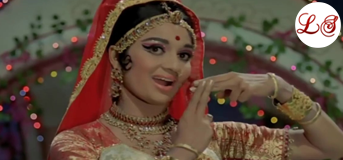

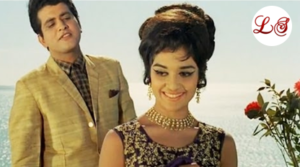
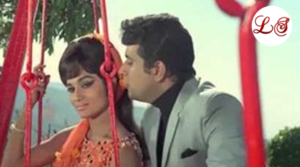
About the Movie Sajan (1969)
The story begins with Ashok Saxena, played by Manoj Kumar, a wealthy young businessman from an influential family.
One day, Ashok reads a newspaper article claiming that he is going to marry Rajni, played by Asha Parekh, a dancer.
Ashok is furious because the report has been published without his consent. He decides to confront Rajni and threatens to take legal action against her.
However, when Ashok meets Rajni, his anger quickly disappears. He is impressed by her beauty, innocence and personality and begins falling in love with her.
Ashok initially hides his true identity from Rajni. As they spend more time together, their relationship develops and they eventually decide to marry.
Rajni's mother, Lajwanti, is also an important part of the story. She carries a secret from her past that becomes connected to the film's central mystery.
The romantic story suddenly takes a dramatic turn when Seth Dharamdas, played by Madan Puri, becomes involved.
Dharamdas is a blackmailer who knows about Lajwanti's past and uses the secret to threaten her family.
The situation becomes increasingly dangerous.
Dharamdas is eventually murdered.
What makes the case extremely complicated is that Ashok, Rajni and Balam, Ashok's driver played by Om Prakash, all end up confessing to the same murder.
Each person gives a different version of what happened.
The police officers investigating the case, Inspector Khan and Havaldar Tiwari, played by Raj Mehra and Shatrughan Sinha respectively, are completely puzzled.
The three suspects appear to have different motives, but each is also trying to protect someone else.
The story gradually changes from a romantic comedy into a suspenseful murder mystery.
The investigation reveals new evidence and conflicting testimonies, while the real circumstances surrounding Dharamdas's death remain hidden.
The mystery finally reaches the courtroom, where the truth about the murder is revealed.
The actual culprit eventually confesses, and Ashok, Rajni and Balam are cleared of the charges.
The film therefore moves from romance and comedy in its first half to suspense, investigation and courtroom drama in its second half.
Main Cast
- Manoj Kumar — Ashok Saxena
- Asha Parekh — Rajni
- Om Prakash — Balam, Ashok's driver
- Madan Puri — Seth Dharamdas / Sheroo
- Shatrughan Sinha — Havaldar Tiwari
- Raj Mehra — Inspector Khan
- Sulochana Latkar — Lajwanti
- Gajanan Jagirdar — Roopa / Guruji
- Aruna Irani — Bulbul
- Jankidas — Taraklal
- Shabnam — Bela
- D. K. Sapru — Jwala Prasad Saxena
- Murad — Judge
- Iftekhar — Lawyer
- Shammi — Aunty
Shatrughan Sinha's appearance as Havaldar Tiwari marked his first released Hindi film.
Director & Production
Director: Mohan Segal
Producer: Mohan Segal
Writer: Vrajendra Gaur
Music: Laxmikant–Pyarelal
Lyrics: Anand Bakshi
Language: Hindi
Genre: Romance, Comedy, Mystery, Thriller
Runtime: Approximately 2 hours 27 minutes
The first part of Sajan was inspired by the 1951 British film Happy Go Lovely, while its murder-mystery portion draws from the 1937 play I Killed the Count.
Music
The music was composed by Laxmikant–Pyarelal, and the songs were written by Anand Bakshi. The soundtrack features prominent playback singers including Lata Mangeshkar, Mohammed Rafi and Asha Bhosle.
Popular Songs
- Sajan Sajan Pukaroon
- Resham Ki Dori
- Ae Mere Mehrban
- Bansuri Tihari Nandlal
- Baton Karo Raton Mein
The title song “Sajan Sajan Pukaroon” was recorded in both female and male versions by Lata Mangeshkar and Mohammed Rafi.
Themes
Sajan explores:
- Love and romance
- Mistaken assumptions
- Family secrets
- Blackmail
- Murder and mystery
- Friendship and loyalty
- Sacrifice
- Justice
- Courtroom drama
- Comedy and suspense
The film's distinctive feature is its shift from a light romantic story to a serious murder mystery.
Legacy
Sajan was a successful 1969 Hindi film and is remembered for its unusual combination of romance and murder mystery. It also holds a place in Hindi-film history as Shatrughan Sinha's first released film.
The film's soundtrack by Laxmikant–Pyarelal, particularly “Sajan Sajan Pukaroon” and “Resham Ki Dori,” remains associated with the classic Hindi music of the late 1960s.