
 Geeton ka Sangrah
Popular:
Zor Dekho Shor Dekho (ज़ोर देखो शोर देखो)
— Gopal Rao
Classic:
Tere Pyar Mein (तेरे प्यार में)
— Hema Sardesai
Classic:
Pehli Pehli Baar Jaaga Hai (पहली पहली बार जागा है)
— Anuradha Sriram
Popular:
Main Kudi Anjaani Hu (मैं कुड़ी अंजानी हूँ)
— Hema Sardesai
New:
Koi Dekh Raha Chup Chhupke (कोई देख रहा छुप छुपके)
— Kavita Krishnamurthy
Popular:
Gham Na Karo (ग़म न करो)
— Kavita Krishnamurthy
Classic:
Kranti Kranti (क्रांति-क्रांति)
— Lata Mangeshkar
Trending:
Looie Shama Sha (लुई शमा शा)
— Lata Mangeshkar
Added:
Ab Ke Baras (अब के बरस)
— Mahendra Kapoor
New:
Chana Jor Garam (चना जोर गरम)
— Kishore Kumar
Mere Mehboob (1963) Songs Lyrics
Mere Mehboob is a 1963 Hindi romantic musical drama directed and produced by H. S. Rawail. The film stars Rajendra Kumar, Sadhana, Ashok Kumar, Nimmi, Pran and Johnny Walker in prominent roles. The music was composed by Naushad, with lyrics by Shakeel Badayuni.
Set against the cultural backdrop of Aligarh and Lucknow, the film tells the love story of Anwar Hussain Anwar, a young poet, and Husna Banu, the sister of a wealthy Nawab. Their romance faces obstacles arising from social differences, family expectations, financial difficulties and misunderstandings.
The film is particularly remembered for its beautiful poetry, traditional Lucknow atmosphere and the evergreen song “Mere Mehboob Tujhe Meri Mohabbat Ki Qasam.” Mere Mehboob became a major box-office success and was the highest-grossing Indian film of 1963.
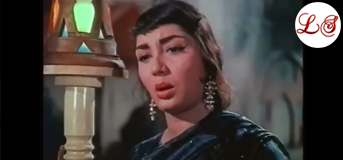
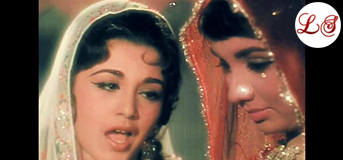
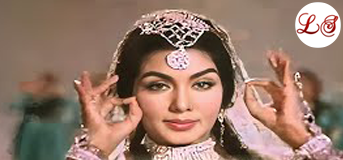
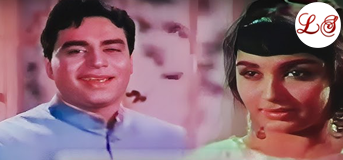
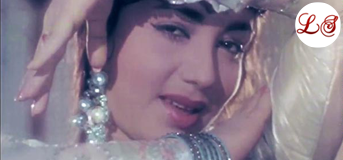
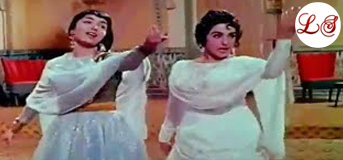
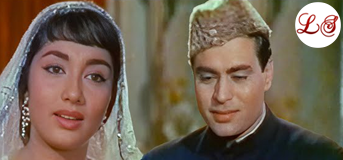
About the Movie Mere Mehboob (1963)
The story begins at Aligarh Muslim University, where Anwar Hussain Anwar, played by Rajendra Kumar, is a young student and aspiring poet.
One day, Anwar catches a glimpse of a beautiful woman wearing a burqa. He is deeply impressed by her eyes and beauty but does not know her identity. The mysterious encounter inspires him to write poetry about his unknown beloved.
Anwar later travels toward Lucknow and eventually meets Nawab Buland Akhtar Changezi, played by Ashok Kumar. The Nawab is impressed by Anwar's personality and literary talent and helps him obtain an opportunity to work as an editor for a magazine.
The Nawab also asks Anwar to teach poetry to his sister Husna Banu, played by Sadhana.
When Anwar meets Husna, he discovers that she is the same veiled woman whom he had admired earlier. Their friendship gradually develops into love.
Husna also falls in love with Anwar. Although Anwar comes from a modest background, Nawab Buland Akhtar accepts their relationship and agrees to their marriage.
However, the situation changes when Anwar's family circumstances become complicated. His sister Najma, played by Nimmi, is associated with the world of courtesans, and Anwar's connection with her creates misunderstandings.
At the same time, Nawab Buland Akhtar is heavily burdened by debt. His cousin Munne Raja, played by Pran, takes advantage of the situation and puts pressure on him to marry Husna to him.
Munne Raja threatens the Nawab with the auction of his mansion and belongings because of his debts.
The circumstances create a major misunderstanding between Anwar and Husna. Husna's family begins to believe that Anwar is involved with a courtesan and that their relationship may bring dishonour to the family.
Anwar and Husna are separated despite their genuine love.
The story then moves toward a dramatic resolution in which the misunderstandings are cleared and the obstacles facing the lovers are overcome.
Eventually, Husna marries Anwar, while Nawab Buland Akhtar is able to recover his property and restore his family's honour.
The film concludes with the triumph of love, loyalty and understanding over social differences and financial difficulties.
Main Cast
- Rajendra Kumar — Anwar Hussain Anwar
- Sadhana Shivdasani — Husna Banu Changezi
- Ashok Kumar — Nawab Buland Akhtar Changezi
- Nimmi — Suraiya / Najma
- Pran — Munne Raja
- Johnny Walker — Bindadin K. Rastogi / Binda Din Ghayal
- Ameeta — Naseemara
- Mumtaz Begum — Munne Raja's aunt
- Sunder — Kanhaiyalal Rastogi
- Malika — Bindadin's love interest
The principal cast and character credits are documented by IMDb.
Director & Production
Director: H. S. Rawail
Producer: H. S. Rawail
Associate Producer: Jagdish Raj
Story: Vinod Kumar
Screenplay: H. S. Rawail & Vinod Kumar
Dialogues: Vinod Kumar
Music: Naushad
Lyrics: Shakeel Badayuni
Cinematography: G. Singh
Editing: Krishan Sachdev
Language: Hindi / Urdu
Genre: Romance, Musical, Drama, Comedy
Runtime: Approximately 164 minutes
Music
The music of Mere Mehboob was composed by legendary music director Naushad, with lyrics by Shakeel Badayuni. The playback singers included Mohammed Rafi, Lata Mangeshkar and Asha Bhosle.
Popular Songs
- Mere Mehboob Tujhe Meri Mohabbat Ki Qasam — Mohammed Rafi
- Mere Mehboob Tujhe Meri Mohabbat Ki Qasam — Lata Mangeshkar
- Aye Husn Zara Jaag — Mohammed Rafi
- Yaad Mein Teri — Mohammed Rafi & Lata Mangeshkar
- Tum Se Izhaar-e-Haal — Mohammed Rafi
- Janam Janam Ka Saath Hai — Lata Mangeshkar
- Yaad Mein Teri — Mohammed Rafi & Lata Mangeshkar
- Allah Bachaye Naujawanon Se — Asha Bhosle
The title song became one of the most recognizable romantic songs associated with classic Hindi cinema.
Themes
Mere Mehboob explores:
- Love and romance
- Social class differences
- Family honour
- Poetry and culture
- Sacrifice
- Misunderstandings
- Financial difficulties
- Traditional values
- Loyalty and devotion
- Love overcoming social barriers
The film's central message is that true love can survive social differences, misunderstandings and difficult circumstances.
Legacy
Mere Mehboob became a major commercial success and was the highest-grossing Indian film of 1963. It is also regarded as one of the important Muslim-social films of Hindi cinema.
The film received recognition at the National Film Awards, earning a Certificate of Merit for the Second Best Feature Film in Hindi. It also won the Filmfare Award for Best Art Direction for Sudhendu Roy.
The film is especially remembered for its combination of Lucknow's traditional culture, Urdu poetry, romance and Naushad's music.
The famous song “Mere Mehboob Tujhe Meri Mohabbat Ki Qasam” was filmed partly at Aligarh Muslim University, including its historic University Hall and Victoria Gate, giving the film a distinctive visual identity.