
 Geeton ka Sangrah
Classic:
Khoobsurat (खूबसूरत)
— Kumar Sanu
Classic:
Chidiya Chidiya Udti Jaaye (चिड़िया चिड़िया उड़ती जाए)
— Uttam Singh
New:
Hippy Hippy Ya (हिप्पी हिप्पी या)
— Asha Bhosle
Trending:
Tunna Tunna (टुन्ना टुन्ना)
— Shankar Mahadevan
Classic:
Chithi Na Koi Sandesh (चिट्ठी ना कोई सन्देश) (Male Version)
— Jagjit Singh
Popular:
Aawaz Do Humko (आवाज़ दो हमको)
— Lata Mangeshkar
Trending:
Pyaar Ko Ho Jaane Do (प्यार को हो जाने दो)
— Kumar Sanu
Popular:
Dil Mera Le Gayi (दिल मेरा ले गयी)
— Alka Yagnik
Classic:
Pagal Karna Pagal Hona (पागल करना पागल होना)
— Anuradha Paudwal
Added:
Punajbi Kudi Maare Jhatke (पंजाबी मुंडा मरे झटके)
— Hema Sardesai
Kohinoor (1960) Songs Lyrics
Kohinoor is a classic 1960 Hindi action-adventure romantic comedy directed by S. U. Sunny and produced by V. N. Sinha. The film stars Dilip Kumar as Rajkumar Dhivendra and Meena Kumari as Rajkumari Chandramukhi, with Kumkum, Jeevan, Leela Chitnis, Mukri and Tun Tun in supporting roles. The music was composed by Naushad, with lyrics by Shakeel Badayuni.
The story follows Rajkumar Dhivendra, who becomes the new king of Kailash Nagar after the death of his father. He falls in love with Rajkumari Chandramukhi of Rajgarh, but their romance is threatened by the ambitious Senapati Veer Singh, who wants to marry Chandramukhi himself.
When Chandramukhi is abducted and Dhivendra attempts to rescue her, the lovers become caught in a dangerous struggle involving betrayal, imprisonment and revenge. The film combines romance, adventure, comedy, sword fights and music, giving it the light-hearted style of a classic Bollywood swashbuckler.



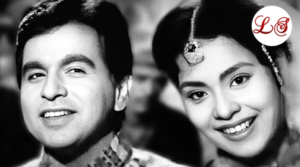



About the Movie Kohinoor (1960)
The film begins after the death of Maharaj Dhiraj Rana Chandrabhan of Kailash Nagar. His son, Rajkumar Dhivendra Pratap Bahadur Chandrabhan, played by Dilip Kumar, is crowned the new king.
Dhivendra has been raised with affection by Veer Singh's wife, who wants him to marry Rajkumari Chandramukhi, the princess of the neighbouring kingdom of Rajgarh.
Chandramukhi, played by Meena Kumari, is a beautiful and spirited princess. Her father welcomes the proposal and asks her to travel to Kailash Nagar.
However, Senapati Veer Singh, played by Jeevan, has his own ambitions. He wants Chandramukhi to marry him and decides to prevent her from reaching Dhivendra.
Chandramukhi is abducted by the Senapati's men and held captive. Dhivendra learns of her situation and attempts to rescue her.
During their escape, Dhivendra and Chandramukhi realize that they have fallen deeply in love. However, the Senapati's forces capture them again.
Dhivendra is badly injured but manages to escape. He is eventually cared for by Raj Nartaki Rajlaxmi, played by Kumkum. Rajlaxmi develops feelings for him, creating another complication in the love story.
After recovering, Dhivendra learns that Chandramukhi is still being held captive at the Senapati's castle. He sets out to rescue her but is captured once again.
Rajlaxmi, driven by jealousy and revenge, becomes involved in the conflict. Dhivendra is subjected to further suffering, while Chandramukhi is given a terrible choice: she must marry the Senapati or watch Dhivendra die.
The story moves through a series of romantic complications, disguises, sword fights, betrayal and adventure before the truth is finally revealed and the villains are defeated.
Dhivendra and Chandramukhi ultimately overcome the obstacles separating them, allowing their love to receive a happy resolution.
Main Cast
- Dilip Kumar — Rajkumar Dhivendra Pratap Bahadur Chandrabhan
- Meena Kumari — Rajkumari Chandramukhi
- Jeevan — Senapati Veer Singh
- Kumkum — Raj Nartaki Rajlaxmi
- Leela Chitnis — Veer Singh's wife
- Mukri — Supporting role
- Tun Tun — Supporting role
- Azim — Surindar Singh
- Uma Bhende — Supporting role
- Raja Kapur — Supporting role
The principal cast and character information are documented by IMDb and other film references.
Director & Production
Director: S. U. Sunny
Producer: V. N. Sinha
Production Company: Republic Film Corporation
Writer: Wajahat Mirza
Music: Naushad
Lyrics: Shakeel Badayuni
Editing: Moosa Mansoor
Language: Hindi
Genre: Action, Adventure, Comedy, Romance, Musical
Runtime: Approximately 151 minutes
Music
The music of Kohinoor was composed by the legendary Naushad, with lyrics by Shakeel Badayuni. The soundtrack is one of the film's most enduring attractions.
Popular Songs
- Madhuban Mein Radhika Nache Re — Mohammed Rafi
- Do Sitaron Ka Zameen Par Hai Milan — Mohammed Rafi & Lata Mangeshkar
- Zara Man Ki Kewadiya Khol — Mohammed Rafi
- Tan Rang Lo Man Rang Lo — Mohammed Rafi & Lata Mangeshkar
- Chalenge Teer Jab Dil Par — Mohammed Rafi & Lata Mangeshkar
- Yeh Kya Zindagi Hai — Lata Mangeshkar
- Jaadugar Qaatil — Asha Bhosle
“Madhuban Mein Radhika Nache Re” became one of the most celebrated songs of the film, particularly remembered for its classical dance presentation.
Themes
Kohinoor explores:
- Love and romance
- Royal duty
- Courage and bravery
- Betrayal
- Jealousy
- Sacrifice
- Adventure
- Good versus evil
- Loyalty and friendship
The film's central story revolves around the love between Dhivendra and Chandramukhi and their struggle against political ambition and personal jealousy.
Legacy
Kohinoor was a major commercial success and is regarded as one of the notable Hindi films of 1960. It was reportedly the third-highest-grossing Indian film of the year and achieved a successful theatrical run.
The film is particularly notable because it showed Dilip Kumar and Meena Kumari in much lighter, more playful roles than the intense tragic characters for which they were widely known. The combination of romance, comedy, adventure and sword fights gave the film a distinctive tone.
Kohinoor is also remembered for Meena Kumari's comic performance, which was unusual given her reputation as Hindi cinema's "Tragedy Queen." The film's light-hearted treatment allowed both leads to display a different side of their acting abilities.
Its music by Naushad, especially “Madhuban Mein Radhika Nache Re” and “Do Sitaron Ka Zameen Par Hai Milan,” remains an important part of the film's legacy.