
 Geeton ka Sangrah
Popular:
Chappaa Chappaa Charakhaa Chale (चप्पा चप्पा चरखा चले)
— Hariharan
New:
Bhej Kahaar (भेज कहार)
— Lata Mangeshkar
New:
Pani Pani Re (पानी पानी रे)
— Lata Mangeshkar
Classic:
Ae Hawa Kuch To Bata (ऐ हवा कुछ तो बता)
— Lata Mangeshkar
New:
Yaad Na Aye Koi ( याद ना आये कोई )
— Lata Mangeshkar
Added:
Tum Gaye Sab Gaya (तुम गए सब गया)
— Lata Mangeshkar
Trending:
Tum Gaye Sab Gaya (तुम गए सब गया) (Male Version)
— Hariharan
Popular:
Chhod Aae Ham Vo Galiyaan (छोड़ आये हम वो गलिया)
— Hariharan
New:
Yaaro Sun Lo Zara (यारों सुन लो ज़ारा)
— K. S. Chithra
Classic:
Pyar Ye Jaane Kaisa (प्यार ये जाने कैसा)
— Kavita Krishnamurthy
Dharmputra (1961) Songs Lyrics
Dharmputra (1961) is a landmark Hindi social drama directed by Yash Chopra and produced by B. R. Chopra under B. R. Films. The film stars Shashi Kapoor, Mala Sinha, Rehman, Manmohan Krishna, Nirupa Roy, and Ashok Kumar. It was one of Yash Chopra's earliest directorial works and marked Shashi Kapoor's debut as an adult leading actor.
The story follows two families—one Hindu and one Muslim—who live together with deep affection and mutual respect during the period of British India. Their peaceful relationship is eventually shattered by the communal tensions surrounding the Partition of India.
At the centre of the story is Dilip Rai, a boy of Muslim parentage who is adopted and raised by a Hindu family. Growing up during an increasingly communal environment, Dilip develops a deep hatred for Muslims without knowing the truth about his own birth.
The film explores the devastating consequences of communal hatred, religious intolerance, identity, prejudice, family bonds, and the legacy of Partition. Yash Raj Films describes Dharmputra as a courageous film from the B. R. Chopra banner and notes that it won the National Award for Best Hindi Film.
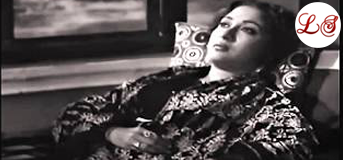
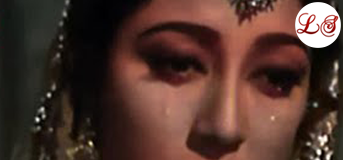
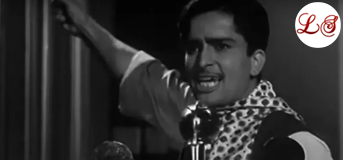
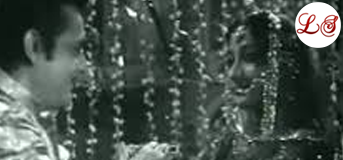
About the Movie Dharmputra (1961)
Movie: Dharmputra
Release Date: 30 July 1961
Language: Hindi
Genre: Social Drama, Historical Drama
Director: Yash Chopra
Producer: B. R. Chopra
Production Banner: B. R. Films
Story: Acharya Chatursen Shastry
Dialogues: Akhtar-ul-Iman
Music: N. Dutta
Cinematography: Dharam Chopra
Editing: Pran Mehra
Runtime: Approximately 150 minutes
Country: India
Main Cast
- Shashi Kapoor as Dilip Rai
- Mala Sinha as Husn Bano
- Rehman as Javed
- Manmohan Krishna as Dr. Amrit Rai
- Nirupa Roy as Mrs. Savitri Amrit Rai
- Ashok Kumar as Nawab Badruddin
- Indrani Mukherjee as Meena
- Deven Verma as Sudesh Rai
- Tabassum as Rekha Rai
- Rajendra Kumar in a special appearance
Story Overview
The film begins with Nawab Badruddin and Gulshan Rai, two close friends from different religious communities. Their families share a warm relationship and live together peacefully.
When Gulshan Rai dies, Nawab Badruddin takes responsibility for his son Amrit. Amrit grows up to become a doctor and eventually marries Savitri.
The Nawab's daughter, Husn Banu, later finds herself in a difficult situation. She is pregnant with the child of her teacher Hamid, who has disappeared.
To protect Husn Banu from social disgrace, Amrit and Savitri help arrange for her to go to Simla, where she gives birth to a baby boy.
The child is then adopted by Amrit and Savitri. They name him Dilip and raise him as their own son. The Nawab is grateful and leaves part of his property to Dilip.
For many years, nobody focuses on the fact that Dilip is actually a Muslim child being raised by a Hindu family.
Then comes the Partition.
The country is torn apart by communal violence, and Dilip's thinking is gradually influenced by the hatred surrounding him. He begins to identify strongly with his adopted religious community and develops hatred toward Muslims.
The tragedy becomes even greater when Dilip directs his hatred toward Husn Banu and Hamid, unaware that Husn Banu is his biological mother.
The central question of the film becomes whether Dilip will discover the truth about his parentage and whether he can overcome the hatred that has taken control of his mind.
Music
The music of Dharmputra was composed by N. Dutta, while Akhtar-ul-Iman wrote the dialogues.
The music supports the film's dramatic and emotional atmosphere, while the dialogue carries much of the film's social and ideological weight.
The film is less focused on conventional romance and entertainment and more concerned with its social message and dramatic narrative.
Major Themes
The major themes of Dharmputra include:
- Communal harmony
- Religious intolerance
- Partition of India
- Identity and parentage
- Adoption
- Family and humanity
- Religious prejudice
- National identity
- Social pressure
- Hindu-Muslim unity
- Consequences of hatred
The most important theme is the danger of allowing religion to become a source of hatred rather than a part of personal identity and spiritual life.
Awards & Recognition
Dharmputra received major national recognition.
- National Award: Best Hindi Feature Film / President's Silver Medal for Best Feature Film
- Filmfare Award: Best Dialogue — Akhtar-ul-Iman
Yash Raj Films specifically notes the film's National Award for Best Hindi Film and Akhtar-ul-Iman's Filmfare recognition for Best Dialogues.