
 Geeton ka Sangrah
Popular:
Na Kajare Ki Dhar (ना कजरे की धार) (Part – 2)
— Sadhana Sargam
Trending:
Na Kajare Ki Tasveer Teri (ना कजरे की तस्वीर तेरी)
— Pankaj Udhas
Popular:
Main Cheez Badi Hoon Mast Mast (मैं चीज़ बड़ी हूँ मस्त मस्त)
— Kavita Krishnamurthy
Popular:
Dil Har Koi Deta Hain (दिल हर कोई देता हैं)
— Alka Yagnik
New:
Ae Kash Kahi Aisa Hota (ऐ काश कही ऐसा होता)
— Kumar Sanu
New:
Subah Se Lekar Shaam Tak (सुबह से लेकर शाम तक)
— Sadhana Sargam
New:
Na Kajre Ki Dhar (ना कजरे की धार)
— Pankaj Udhas
Popular:
Tip Tip Barsa Paani (टिप टिप बरसा पानी)
— Alka Yagnik
Classic:
Tu Chiz Badi Hai Mast Mast (तू चीज़ बड़ी है मस्त मस्त)
— Kavita Krishnamurthy
Classic:
Kya Sochta Hai Ae Dil (क्या सोचता हैं ऐ दिल)
— Anuradha Paudwal
Yaadein (1964) Songs Lyrics
Yaadein is a 1964 Hindi drama-mystery film directed and produced by Sunil Dutt, who also plays the only actor to appear on screen throughout the film. Written by Akhtar-Ul-Iman, the film is a highly experimental one-man narrative about a husband confronting the emptiness of his home after his wife and children leave him.
The film follows Anil, a successful businessman who returns home one day to discover that his wife Priya and their children are gone. Alone in the house, he begins recalling his married life—their first meeting, marriage, children, happy memories, arguments and the mistakes that gradually damaged their relationship. The story unfolds almost entirely through Anil's soliloquy, memories and imagination.
One of the film's most remarkable features is that Sunil Dutt is the only actor who appears on screen, while other characters are represented through voices or memories. The film is consequently recognized as a landmark experiment in Indian cinema and is associated with the Guinness World Records category for the fewest actors in a narrative film.

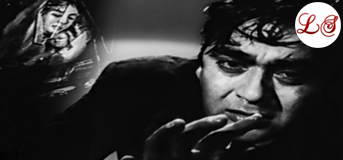
About the Movie Yaadein (1964)
The story centers on Anil, a wealthy and successful businessman.
One evening, Anil returns home expecting to find his wife Priya and their children waiting for him.
Instead, he finds the house completely empty.
His wife and children have left.
Anil is shocked and unable to understand what has happened.
He discovers a letter from Priya explaining that she has decided to leave him.
Alone in the large house, Anil begins remembering his past.
His memories take him back to the time when he first met Priya.
They gradually fall in love and eventually get married.
Their early married life is filled with happiness.
The couple later has children, and Anil initially enjoys his new role as a husband and father.
However, as time passes, problems begin developing in their marriage.
Anil becomes increasingly absorbed in his work and social life.
He begins spending less time with his family.
Priya feels neglected and believes that Anil no longer values her.
Anil, meanwhile, becomes suspicious of Priya and starts questioning her loyalty.
Their misunderstandings gradually turn into arguments.
Instead of communicating honestly, both husband and wife become increasingly distant.
Anil also becomes involved with another woman, Shama, which further damages the marriage.
In the present, as Anil walks through his empty house, everyday objects remind him of his wife and children.
The memories become increasingly painful.
He remembers their happy moments, family celebrations, children's birthdays and ordinary moments that he once took for granted.
Anil begins to understand how much his family meant to him.
At the same time, he struggles with anger and refuses to accept responsibility for everything that went wrong.
He initially blames Priya for leaving.
But as he continues remembering their relationship, he gradually recognizes his own mistakes.
He realizes that his behavior, neglect and infidelity contributed heavily to the breakdown of the marriage.
The lonely house becomes a reflection of Anil's emotional state.
Without his family, his wealth and possessions provide him with no real happiness.
Overcome by loneliness and despair, Anil reaches a breaking point.
He contemplates ending his life.
Just when the situation reaches its darkest point, Priya returns.
Her arrival gives Anil another chance.
She forgives him, and the couple is finally able to confront the problems that destroyed their relationship.
The film ends on an emotional note, emphasizing that a house is not made a home by wealth or furniture but by the people and relationships within it.
Main Cast
- Sunil Dutt — Anil
- Nargis Dutt — Priya, Anil's wife, represented primarily through voice/silhouette
- Sanjay Dutt — Voice of Pavan, Anil and Priya's son
Sunil Dutt is the only actor who appears visually throughout the main narrative.
Director & Production
Director: Sunil Dutt
Producer: Sunil Dutt
Production Banner: Ajanta Arts
Writer: Akhtar-Ul-Iman
Music: Vasant Desai
Cinematography: S. Ramachandra
Language: Hindi
Genre: Drama, Mystery
Runtime: Approximately 113 minutes
Colour: Black and White
Music
The music was composed by Vasant Desai, with lyrics by Anand Bakshi. The film contains two notable songs sung by Lata Mangeshkar:
- Dekha Hai Sapna Koi
- Radha Tu Hai Deewani
The music and background score play an important role because the film relies heavily on Anil's memories, inner thoughts and spoken narration.
Themes
Yaadein explores:
- Marital relationships
- Loneliness
- Memories
- Regret
- Family and responsibility
- Infidelity
- Misunderstanding
- Emotional isolation
- Forgiveness
- The meaning of home
The film's central message is that material wealth cannot replace love, companionship and family, and that people often realize the value of their relationships only after they have lost them.
Legacy
Yaadein is considered one of the most unusual experiments in Indian cinema. Its most distinctive feature is its one-actor format, with Sunil Dutt carrying virtually the entire film through his performance and monologue.
The film received significant recognition despite being commercially unsuccessful. Sunil Dutt received the National Film Award for Best Feature Film in Hindi, while the film also won Filmfare Awards for Best Cinematographer (Black & White) for S. Ramachandra and Best Sound Recordist for Essa M. Suratwala.
Its experimental storytelling, psychological focus and unusual single-actor presentation have helped Yaadein remain an important example of innovative Hindi filmmaking.